Indonesia
Kapuas Extends Emergency Status Amid Ongoing Drought and Forest Fires
The Kapuas government in Central Kalimantan has prolonged its emergency response to drought and forest fires for another two weeks as conditions remain critical.
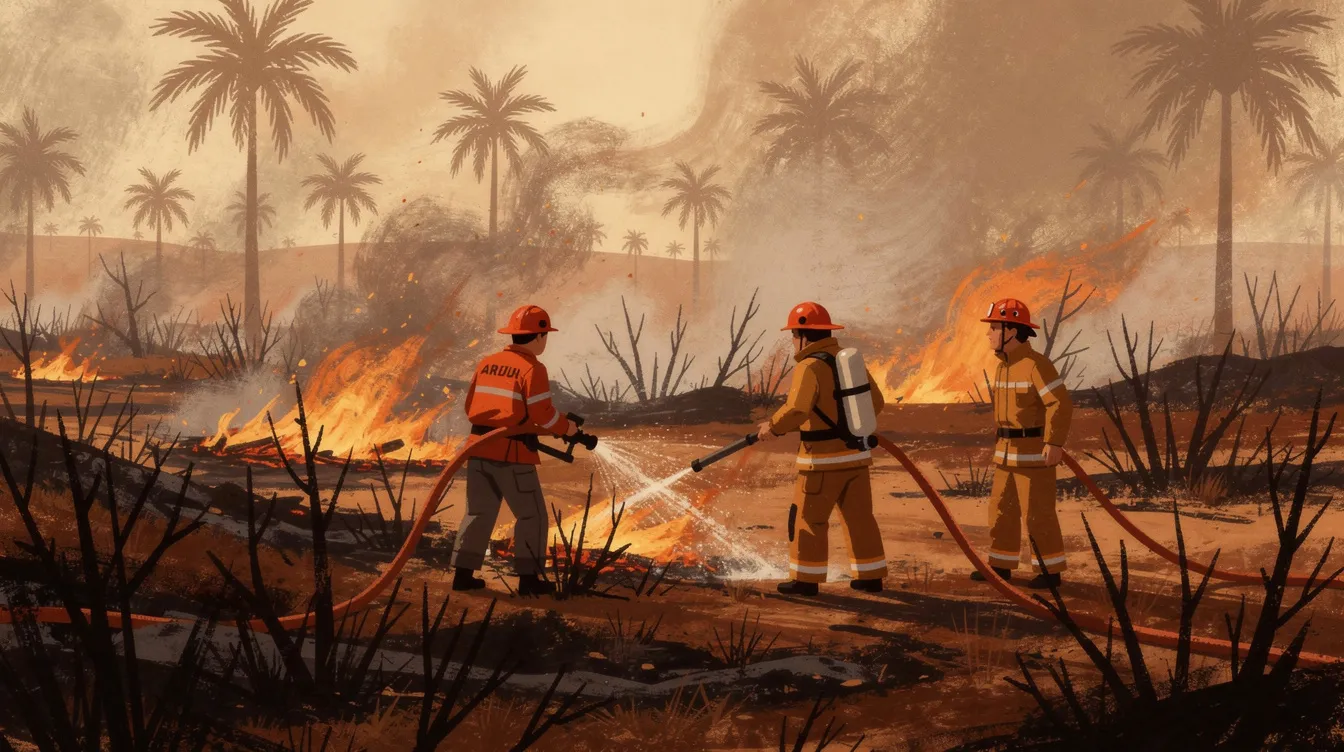
The Kapuas government in Central Kalimantan has officially extended its emergency status for drought and forest fires for an additional 14 days, until October 13, 2026. This decision was announced by Deputy Regent Dodo during an evaluation meeting at the central command post for disaster response, attended by various local officials and volunteers.
According to Dodo, the extension is necessary due to the ongoing dry conditions and the significant risk of further forest fires. The Meteorology, Climatology, and Geophysics Agency (BMKG) has predicted that rainfall in the region will remain very low until early November, heightening concerns for both environmental and public health impacts.
Dodo expressed hope for rain soon and encouraged everyone to stay motivated, keep healthy, and remain optimistic, highlighting the need for collective action in disaster management.
Through September 2026, the area affected by forest fires in Kapuas has reached approximately 3,434.12 hectares since the beginning of the year. The Mantangai sub-district has been particularly hard-hit, with 1,903.15 hectares burned, followed by Dadahup and Kapuas Timur with 309.9 and 196.5 hectares, respectively, as reported by Pangeran S. Pandiangan, head of the Kapuas Disaster Mitigation Agency (BPBD).
In response to the situation, local officials are emphasizing the importance of community cooperation, or gotong royong, in preventing forest fires. Dodo urged all stakeholders, including local government, technical agencies, and community volunteers, to enhance their readiness and coordination to mitigate the impacts of the drought and fires.
The Kapuas government has also been proactive in addressing the crisis by implementing measures to ensure rapid responses to water shortages and fire threats, aiming to protect both the environment and public health from the adverse effects of smoke and air pollution.
This extension of emergency status follows a series of initiatives by the Indonesian government to combat the rising incidence of forest fires, particularly during the prolonged dry season exacerbated by the ongoing El Niño phenomenon. The government has previously targeted companies linked to these fires, reflecting a broader commitment to environmental protection.
Indonesian coverage of the situation has emphasized the broader regional implications of the haze caused by these forest fires. Reports indicate that air quality in neighboring countries, such as Malaysia and Singapore, has significantly deteriorated, with some areas experiencing hazardous levels of air pollution due to transboundary haze. The Diplomat noted that the haze situation affecting Southeast Asia is partly a reflection of Indonesia's management of its forest fires, with millions suffering from the consequences.
While Indonesian outlets have focused on the need for stronger leadership and accountability from the government, they have also highlighted the urgency of implementing effective measures to prevent future fires. The Diplomat pointed out that the current haze crisis is exacerbated by the El Niño climate cycle, which has led to drier conditions and longer dry seasons, making fire management increasingly challenging.
In contrast, the Kapuas government's messaging has centered on local community efforts and immediate responses to the crisis, with less emphasis on the national leadership's role in addressing the broader haze issue.
Overall, as Indonesia grapples with the dual challenges of drought and forest fires, the implications for air quality and public health extend beyond its borders.