Indonesia
Indonesia's Palm Oil Industry Tackles Sustainability Challenges with Super Seed Innovations
Amid rising global demand for vegetable oils, Indonesia's palm oil sector is focusing on high-yield seed varieties to enhance productivity sustainably.
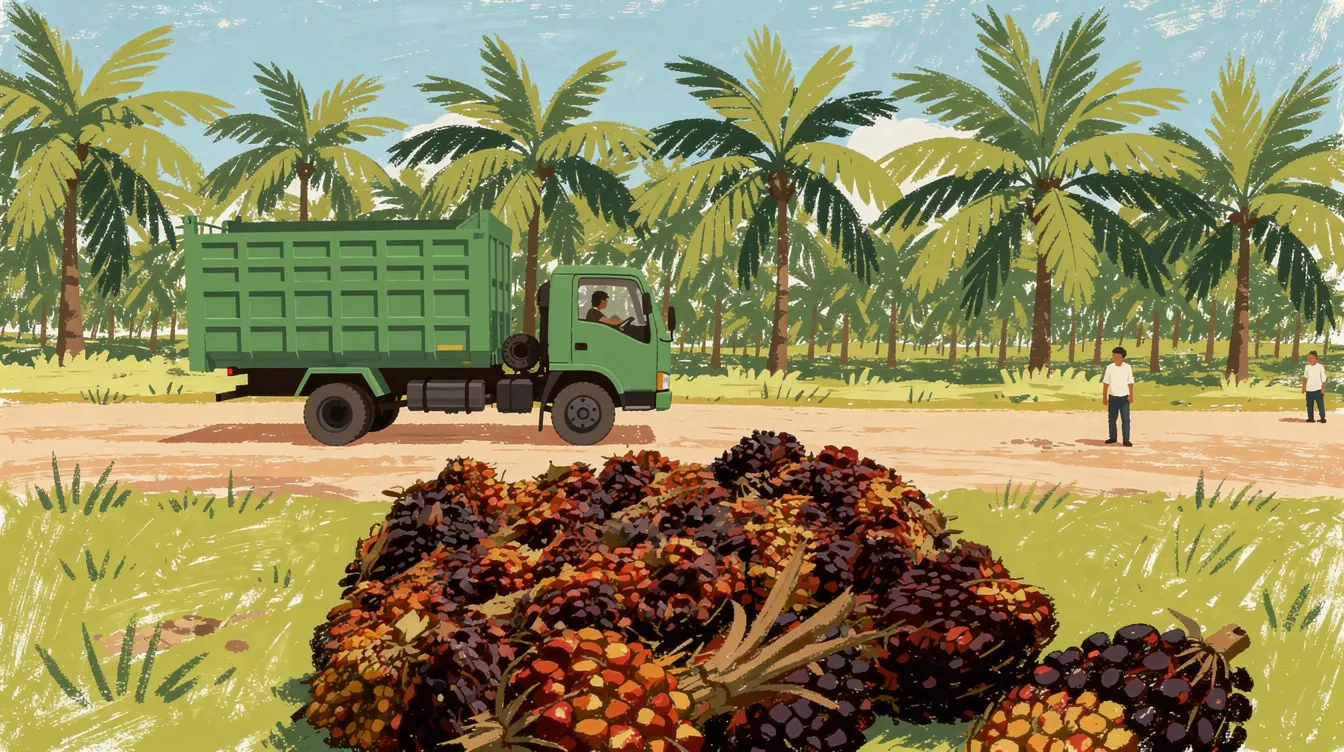
As the global demand for vegetable oils continues to rise, Indonesia, which supplies approximately 22% of the world's palm oil, faces significant challenges in balancing production and sustainability. According to data from Oil World, between 2020 and 2025, global vegetable oil consumption is projected to grow at a rate of 2.7% per year, outpacing production growth of only 2.6% annually. This discrepancy could lead to a supply gap, with consumption expected to reach 245 million tons by 2030 and 365 million tons by 2050, while production may stagnate at around 227 million tons.
In response to these challenges, the Indonesian palm oil industry is investing in research and innovation to develop superior seed varieties that promise higher productivity without the need for expanding agricultural land. PT Astra Agro Lestari, a leading player in the sector, has already released three high-yield seed varieties recognized by the Ministry of Agriculture: DxP AAL Lestari, DxP AAL Sejahtera, and DxP AAL Nirmala. These varieties are engineered to produce fresh fruit bunches (FFB) at rates of 30-32 tons per hectare annually.
Ardha Apriyanto, a plant breeding expert at PT Astra Agro Lestari, explained that the productivity of oil palm trees is determined primarily by the number and weight of the fruit bunches they produce. The newly developed seeds not only yield more fruit but also grow at a controlled rate of 39-42 centimeters per year, which is crucial for managing operational costs and ensuring longer productive lifespans for the trees. This approach aligns with the principles of gotong royong (communal cooperation), as it seeks to enhance productivity while minimizing environmental impact.
“If we want to increase production, we need to focus on both the quantity and weight of the fruit bunches.”Ardha Apriyanto, Plant Breeding Expert, PT Astra Agro Lestari
Since the introduction of these superior seed varieties in 2023, Astra Agro has been gradually replanting approximately 5,000 hectares of aging palm oil plantations. This selective replanting strategy aims to replace trees that are over 30 years old and no longer economically viable, thus ensuring a sustainable transition without losing production capacity. The company has reported promising initial results, achieving targeted productivity levels, although ongoing evaluations are necessary to optimize care practices and maximize potential yields.
In addition to the initial three varieties, Astra Agro has also developed a new generation of seeds, set to be released in 2025, that includes enhanced disease resistance against Ganoderma, a fungus that poses a significant threat to palm oil production. These new varieties, DxP AAL Lestari MRG, DxP AAL Sejahtera MRG, and DxP AAL Nirmala MRG, are expected to further improve productivity, with projected yields of up to 32.7 tons of FFB per hectare and crude palm oil (CPO) extraction rates of 26-29%.
While Indonesian coverage has highlighted the innovative strides being made in seed technology, it has also underscored the broader implications of sustainability in the palm oil sector. Local media have pointed out that the industry's focus on high-yield varieties must be balanced with environmental considerations, particularly in light of Indonesia's commitment to reducing deforestation and promoting sustainable agriculture. For instance, a report from Kompas emphasized that while technological advancements are crucial, the industry must also engage in responsible land use practices to avoid exacerbating environmental degradation.
As the industry grapples with sustainability pressures and the need for increased production, the focus on innovative seed technology represents a critical step towards achieving both economic viability and environmental responsibility. The success of these initiatives will depend on continued collaboration among stakeholders, including farmers, researchers, and policymakers, to ensure that the benefits of improved productivity are shared across the community.