ASEAN
US AI Chip Rules Put Southeast Asia’s Data Centre Tenants and Lenders in Focus
Natixis estimates that China-linked customers account for 32% of live data centre capacity across Singapore, Malaysia, Thailand and Indonesia, as new US licensing rules reshape access to advanced chips.
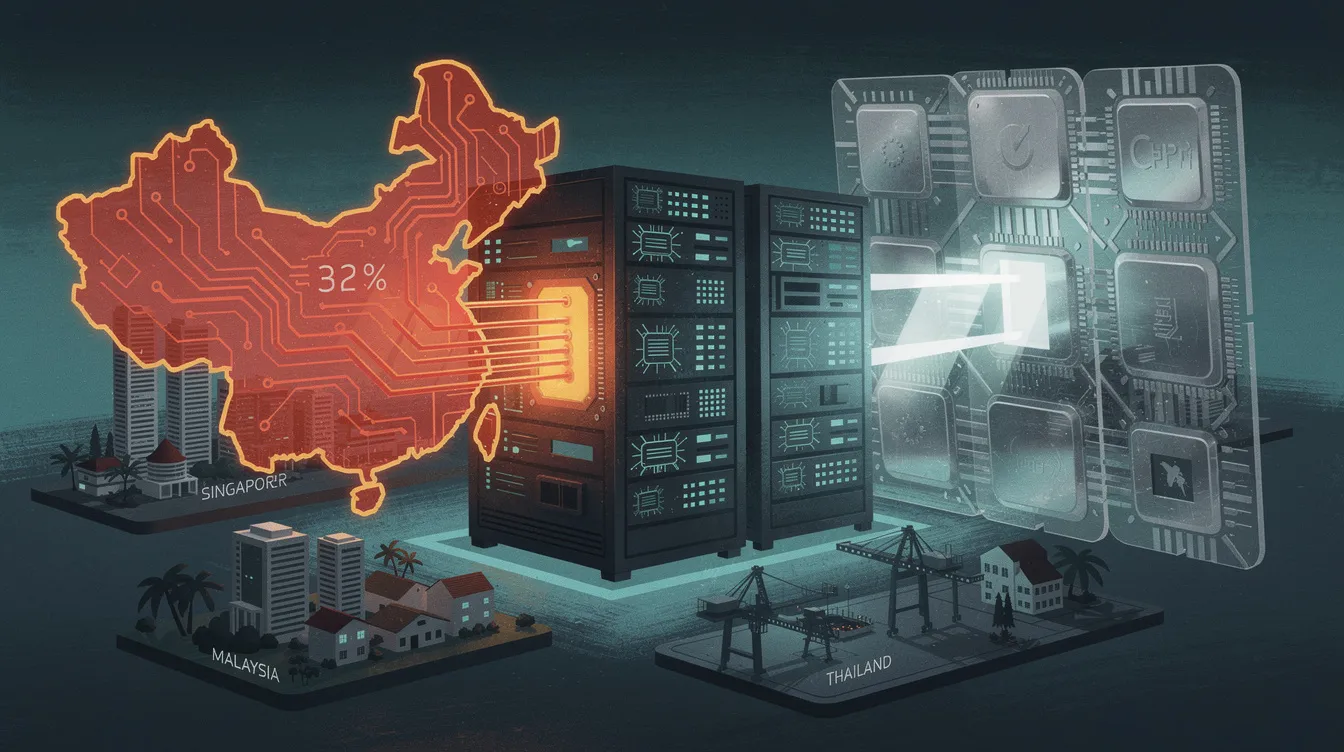
New US export rules could change who can use advanced artificial intelligence chips housed in Southeast Asian data centres, putting the region’s China-linked tenants and their lenders under closer scrutiny. A Natixis report estimates that China-linked customers account for 32% of live data centre capacity across Singapore, Malaysia, Thailand and Indonesia, though it says limited public information on tenants makes the figure uncertain.
The rules require a US licence for shipments of certain advanced AI chips to Singapore, Malaysia, Thailand, Indonesia and Brazil, unless the buyer is headquartered in the United States. Natixis says a licence is also required for data centres serving China-headquartered firms. Singapore’s digital development and trade ministries said they were studying the measure, engaging affected companies and discussing its scope with US authorities.
The US Commerce Department’s Bureau of Industry and Security said the provision is intended to prevent restrictions on sensitive American technology being bypassed through remote computing arrangements in third countries. For Singapore, the question is how the licensing framework will apply to facilities that host equipment owned by customers, rather than operating all of their own computing infrastructure.
China-linked demand is difficult to measure
Natixis puts the China-linked share of capacity at about 15% in Singapore, compared with more than 45% in Malaysia and Thailand. Its estimate rises to 63% across the four markets if every tenant whose identity is unknown is assumed to be Chinese. The firm cautions that this is an upper-bound scenario, not a verified measure of customer exposure.
The report links that uncertainty to the region’s operating model. Natixis estimates that only 16% of Southeast Asian data centres are self-built, compared with 48% in the United States. Most regional capacity is in co-location facilities: third-party buildings where customers rent space for their own servers and networking equipment. That structure can leave a facility’s exposure dependent on who its tenants are, even when the operator is not itself a Chinese company.
Natixis says Chinese firms turned to overseas data centres after earlier US restrictions limited chip shipments to China without barring the rental of computing power abroad. Citing figures from the Institute of Progress, it estimates that overseas computing power will make up 23% of China’s total in 2026 and could reach 32% in 2027; Southeast Asia hosts about two-thirds of China’s overseas rental demand, according to the report.
The report identifies Singapore-based operators Bridge and DayOne as examples of companies whose exposure may be tied to their customers. Together, Natixis says, they hold 35% of capacity among the operators it discusses, and it notes that ByteDance is reported to be the largest tenant of each. The firm says that the definition of a China-linked owner is unclear, and that customer relationships are central to its assessment.
Debt depends on keeping facilities occupied
The financing channel is also substantial. Natixis says US$48 billion has been raised through syndicated loans for Southeast Asian data centres since 2023. It estimates that regional banks account for about 31% of those loans in the report’s identified lender breakdown, compared with about 19% for European banks and about 12% for Chinese banks. The remaining share could not be identified, it says.
Natixis cites a syndicated loan for ByteDance data centre financing in which 15 Chinese banks pledged US$18.9 billion, or 64% of the total. The report says the sector’s debt model requires a fast payback, with occupancy a key variable. As an illustration, it says a B200 chip cluster funded mostly with debt would need to be rented about 80% of the time just to cover monthly costs.
That leaves operators exposed to delays in licensing or a loss of tenants, Natixis argues. The report also cites a US$480 million loan for Nvidia hardware used by ByteDance that was frozen while lenders assessed the new rule.
For Singapore’s banks, Natixis estimates data centres represent 3% to 5% of loans at some of the country’s largest lenders. The firm therefore characterises the nearer risk as slower lending to the sector rather than a threat to the banks themselves. That distinction matters for a market where infrastructure financing is growing, but where the ability to secure chip access and keep equipment in use may now carry more weight in credit decisions.
Operators face a change in tenant mix
Natixis says China-linked operators could be affected if their main tenants need licences and cannot use the US exemption. By contrast, it expects US hyperscalers such as Google and Amazon Web Services to be exempt from the five-country licensing requirements and potentially to benefit if customers shift towards US firms.
The report also says US private equity owns four of the 10 largest operators and 38% of their capacity, and that all four are weighing sales this year. Natixis says buyers are likely to pay less for facilities with Chinese anchor tenants. It points to a delay in DayOne’s planned initial public offering amid unfavourable market conditions, without attributing the delay solely to the new rules.
How quickly Chinese demand might leave Southeast Asia, and whether other customers would replace it, remains unclear, Natixis says. Singapore’s ministries have said they are engaging affected businesses and US authorities as they assess the measure’s scope and implementation.