Singapore
AI Infrastructure Fuels Southeast Asia's Growth Potential
Financial institutions are pivotal in financing and facilitating AI infrastructure projects across Southeast Asia, driving economic growth and technological advancement.
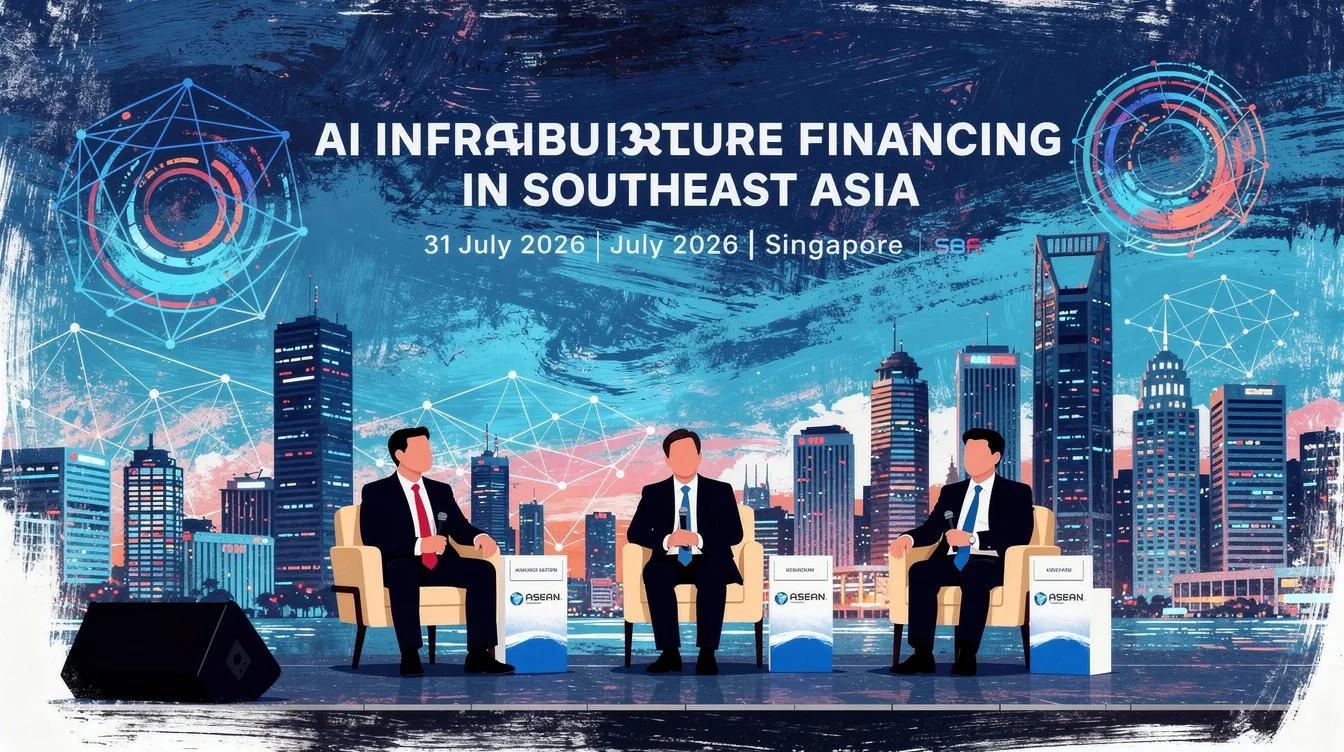
As artificial intelligence (AI) continues to transform the global business landscape, Southeast Asia is poised to leverage this technology through significant investments in AI infrastructure. According to Edmund Leong, head of corporate banking at United Overseas Bank (UOB), the AI narrative extends beyond mere technology adoption; it represents a broader economic growth opportunity for the region.
At the Asean Conference 2026, Leong emphasized that the deployment of AI models across various sectors—including healthcare, finance, and manufacturing—demands substantial computing power, primarily sourced from data centres. These centres are rapidly emerging as critical components of the AI infrastructure ecosystem, with countries like Malaysia, Thailand, Indonesia, and Vietnam ramping up their capacities to meet growing demand.
“The AI story is not just a technology story; it is also an economic growth story.”Edmund Leong, Head of Corporate Banking, UOB
UOB's role in this evolving landscape is multifaceted. The bank is not only providing financing but also acting as a 'superconnector' that facilitates capital mobilization through various channels, including loans and equity markets. Leong noted that many data centre projects require collaboration with local regulators and utility services to ensure adequate resources, highlighting the importance of strategic partnerships in successful project execution.
Recent developments underscore the urgency of enhancing data centre capabilities in the region. For instance, UOB, in collaboration with other banks, arranged a loan of approximately IDR 6.7 trillion (around USD 500 million) for a data centre project on Batam Island, Indonesia. This project is intended to serve as a digital bridge between Singapore and Indonesia, enabling Singaporean businesses to tap into Indonesian infrastructure and talent resources.
However, the growth of AI infrastructure is not without challenges. Leong pointed out two major bottlenecks: power supply and semiconductor availability. He estimated that Southeast Asia would need to invest around USD 150 billion in energy infrastructure over the next five years to support data centre expansion. Additionally, the ongoing global semiconductor shortage poses a significant hurdle, with demand outpacing production capacity. Nevertheless, Leong remains optimistic that improvements in technology and supply chains will eventually alleviate these constraints.
“AI infrastructure is extremely capital-intensive, so long-term commitment from investors is critical.”Edmund Leong, Head of Corporate Banking, UOB
Financial institutions like UOB are also adapting their internal operations to harness AI effectively. The bank has reported a more than 5% year-on-year increase in corporate banking revenue, attributed to its AI-driven portfolio optimization solution. This approach not only enhances capital allocation but also mitigates risk, demonstrating AI's potential to complement human decision-making in a complex financial environment.
As the competition for AI infrastructure intensifies, UOB's strategic initiatives reflect a broader trend among financial institutions in Southeast Asia. A consortium led by UOB recently arranged a THB 28 billion (approximately USD 800 million) green loan for DayOne Data Centres in Thailand, marking a significant investment in sustainable digital infrastructure. This project aligns with Thailand's ambition to become a regional hub for cloud computing and AI services.
“We are not adopting AI for its novelty, but leveraging it to create meaningful impact for our customers.”Richard Lowe, Chief Data Officer, UOB
Looking ahead, both Leong and John Kain, director of financial services and market development at Amazon Web Services, emphasized the need for businesses to focus on clear implementation strategies when investing in AI. They cautioned against speculative investments without defined objectives, advocating for a governance framework that fosters innovation while ensuring compliance with regulatory standards.
As Southeast Asia continues to navigate the complexities of AI infrastructure development, the role of financial institutions will be crucial in ensuring that projects are not only funded but also strategically aligned with broader economic goals.