Vietnam
Vietnam's Green Agriculture Begins to Yield 'Golden' Value
As Vietnam's certified green agricultural products gain traction, coffee prices surge amid changing EU regulations.
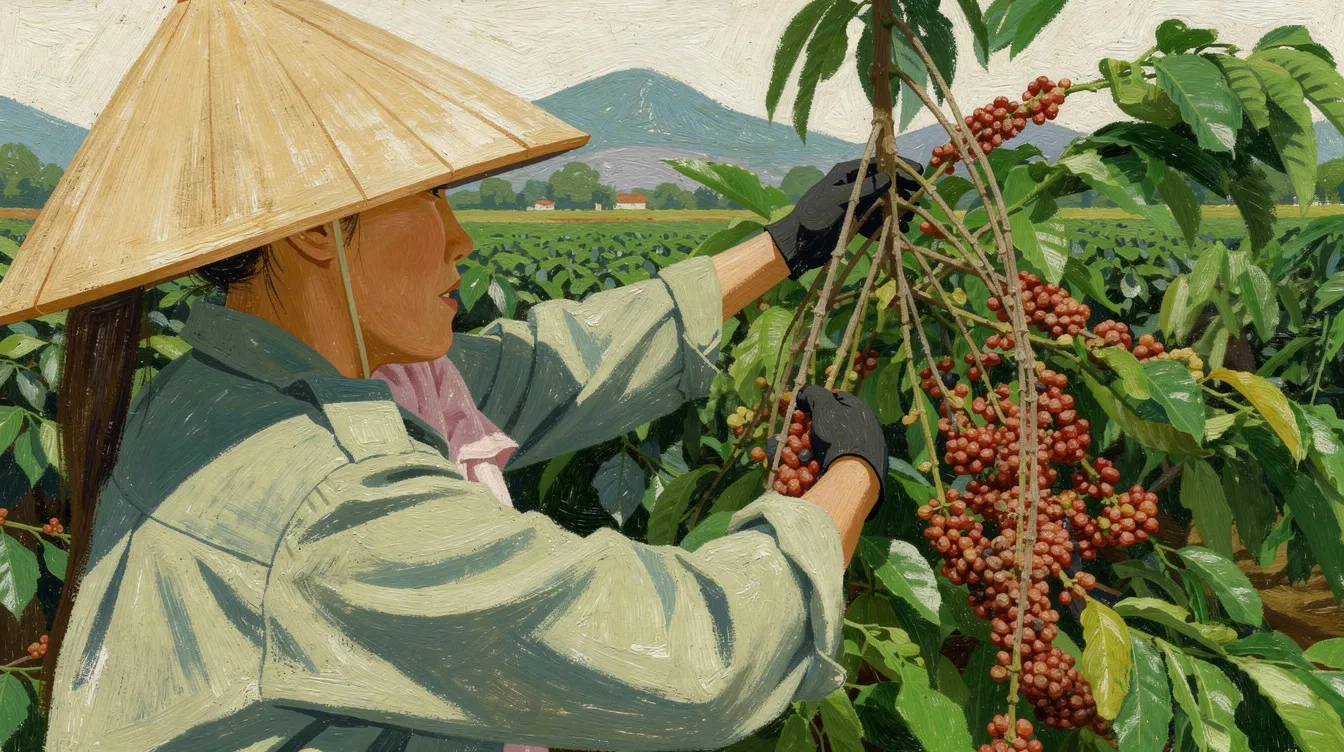
Vietnam's agricultural sector is experiencing a significant shift as certified green products begin to command higher prices on the global market. This trend is particularly evident in the coffee industry, where recent fluctuations have seen robusta coffee prices rise by $136 per ton and arabica by $727 per ton. In Vietnam, coffee from the Central Highlands is currently priced at approximately 95,500 VND per kilogram (about $4.06), an increase of 2,500 VND from the previous week, marking the highest price in several months.
According to Đỗ Hà Nam, Vice President of the Vietnam Coffee-Cocoa Association (VICOFA), the impending implementation of the European Union's Deforestation Regulation (EUDR) in 2027 positions Vietnam favorably in the coffee market. Currently, Vietnamese coffee that complies with EUDR standards is being exported to the EU at prices exceeding the market rate by $50 per ton. This regulatory framework, originally set to take effect in 2025, was postponed to allow countries to prepare adequately.
Nam noted that when the EUDR officially comes into effect, the opportunities for Vietnamese coffee will be substantial. He emphasized that Vietnam is currently the most compliant supplier with these regulations, which could lead to a unique market position once they are enforced.
“When the EUDR officially comes into effect, the opportunities for Vietnamese coffee will be substantial.”Đỗ Hà Nam, Vice President, VICOFA
Thái Anh Tuấn, General Director of Simexco DakLak, expressed optimism about the market's direction, stating that even before the EU's official adoption of the EUDR, many European customers are already sourcing coffee products that meet these standards. The company has proactively developed a database of coffee-growing regions, collaborating with local authorities to ensure compliance with EUDR.
As European consumers increasingly prefer products with biodegradable packaging and sustainable farming practices, Vietnamese agricultural exports are adapting to meet these demands. Compliance with standards such as GlobalGAP and Organic certification is essential for accessing major European supermarket chains.
“The company has proactively developed a database of coffee-growing regions to ensure compliance with EUDR.”Thái Anh Tuấn, General Director, Simexco DakLak
Despite the positive outlook, the share of Vietnamese coffee in the European market remains modest. The European Coffee Federation reported that the total value of the coffee supply chain in the EU and associated countries is nearly $667 billion. In 2025, Vietnam's coffee exports to the EU are projected to reach around 666,000 tons, valued at approximately $3.6 billion, accounting for nearly 41% of the country's total coffee export revenue.
Beyond coffee, the trend towards sustainable agriculture is becoming increasingly important across various agricultural products. The EU's IUU regulation, aimed at combating illegal fishing practices, exemplifies this shift. Other significant markets, including the United States and China, are also implementing similar regulations, necessitating that Vietnam's agricultural sector comply with stringent environmental and health standards.
Đặng Phúc Nguyên, Secretary General of the Vietnam Fruit and Vegetable Association (VINAFRUIT), highlighted that while fruits and vegetables are not currently under EUDR regulations, the growing trend of green consumption in the EU requires proactive preparation. He warned that any shipment found exceeding pesticide residue limits could jeopardize an entire export chain.
“Any shipment found exceeding pesticide residue limits could jeopardize an entire export chain.”Đặng Phúc Nguyên, Secretary General, VINAFRUIT
As climate change intensifies, Nguyên noted that certain tropical fruits, such as passion fruit, are expected to see increased demand in Europe, where they are popular for beverages and desserts. The EU has significantly imported both fresh and frozen passion fruit puree, alongside other tropical fruits like dragon fruit and coconut.
To succeed in exporting agricultural products, compliance with quality and environmental regulations is essential. This necessitates a certain scale of production, as larger operations can reduce compliance costs per unit, thereby enhancing competitiveness in international markets.