Thailand
Thailand Faces New U.S. Tariff Challenges Amid Trade Policy Shifts
Recent U.S. court rulings and tariff changes under Section 301 raise concerns for Thai exports, particularly regarding forced labor and structural excess capacity.
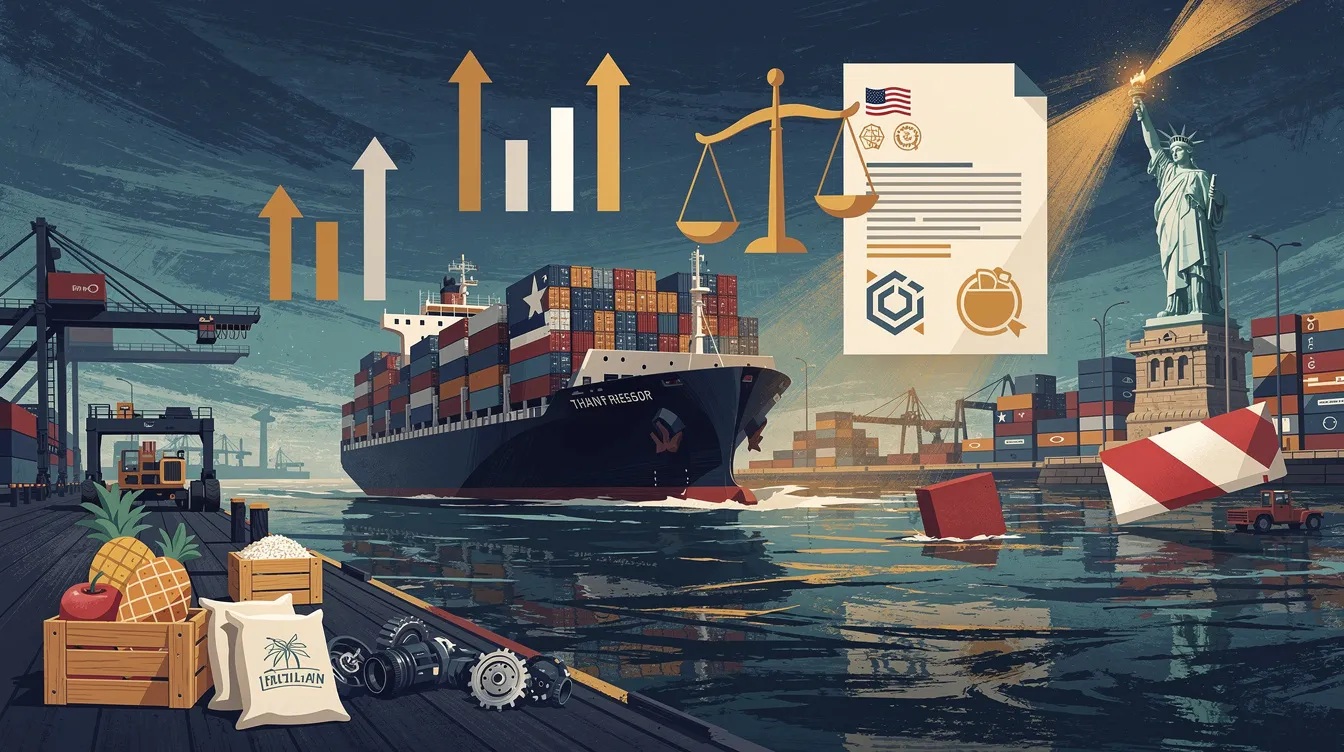
Thailand's export sector is entering a critical phase as it navigates new tariff regulations imposed by the United States, following a significant ruling by the U.S. Supreme Court. On February 20, 2024, the court determined that the Trump administration lacked the authority to impose tariffs under the International Emergency Economic Powers Act (IEEPA). This ruling has forced the U.S. government to suspend certain tariffs announced in 2023 and to instead implement a temporary 10% tariff under Section 122 of the Trade Act of 1974, effective from February 24 to July 24, 2024.
During this interim period, the U.S. plans to explore the use of Section 301 of the Trade Act, which allows for long-term tariffs based on investigations into unfair trade practices. These investigations commenced on March 11-12, 2024, focusing on two main issues: structural excess capacity and forced labor. On June 2, the U.S. Trade Representative (USTR) announced plans to impose tariffs of 10% to 12.5% on imports from 60 trading partners, categorizing countries based on their measures against forced labor. Thailand falls into the higher tariff group, facing a potential 12.5% tariff due to insufficient legal measures against goods produced with forced labor.
“Thailand may need to further open its domestic market to U.S. goods as part of the ART negotiations.”SCB EIC, analysts
According to analysts at SCB EIC, Thailand's lack of robust legislation against forced labor could lead to significant challenges for its export sector. While the Thai government has the opportunity to negotiate and present its case to the U.S. by July 6, the likelihood of achieving a substantial reduction in tariffs appears limited. The urgency of these negotiations is underscored by the Ministry of Commerce's push for a Reciprocal Trade Agreement (ART) with the U.S., aimed at enhancing Thailand's competitiveness in the U.S. market.
Looking ahead, Thailand's international trade landscape remains uncertain, hinging on two critical factors:
“The potential for higher tariffs could diminish Thailand's competitive edge in the U.S. market.”SCB EIC, analysts
- Market Opening: Thailand may need to further open its domestic market to U.S. goods as part of the ART negotiations. Countries that have signed ARTs with the U.S. tend to receive lower tariff rates, which could help mitigate trade uncertainties and enhance Thailand's attractiveness for foreign investment.
- Structural Excess Capacity Tariffs: Thailand is also under investigation for structural excess capacity, which could lead to additional tariffs. The U.S. has noted a rapid increase in Thailand's trade surplus, particularly in key industries such as automotive and machinery, despite low capacity utilization rates in Thai manufacturing.
As Thailand faces the dual threat of tariffs under Section 301, the SCB EIC warns that the Average Effective Tariff Rate could rise, further complicating the export landscape. The potential for higher tariffs could diminish Thailand's competitive edge in the U.S. market, especially when compared to other regional competitors.
In response to these challenges, Thai businesses are encouraged to diversify their markets and improve competitiveness. The government is advised to expedite Free Trade Agreements (FTAs) with larger trading partners while maintaining close negotiations with the U.S. to minimize tariff risks. If Thailand must engage in ART discussions, establishing a suitable transition period and mechanisms to mitigate impacts on sensitive sectors, such as agriculture, will be crucial for maintaining export viability.