Singapore
Singapore's Senior Minister Advocates for Tripartite Cooperation to Secure Port Jobs Amid Technological Change
At the 80th anniversary of the Singapore Port Workers Union, Senior Minister Lee Hsien Loong emphasizes the need for collaboration among unions, management, and the government to navigate the challenges posed by AI and global trade shifts.
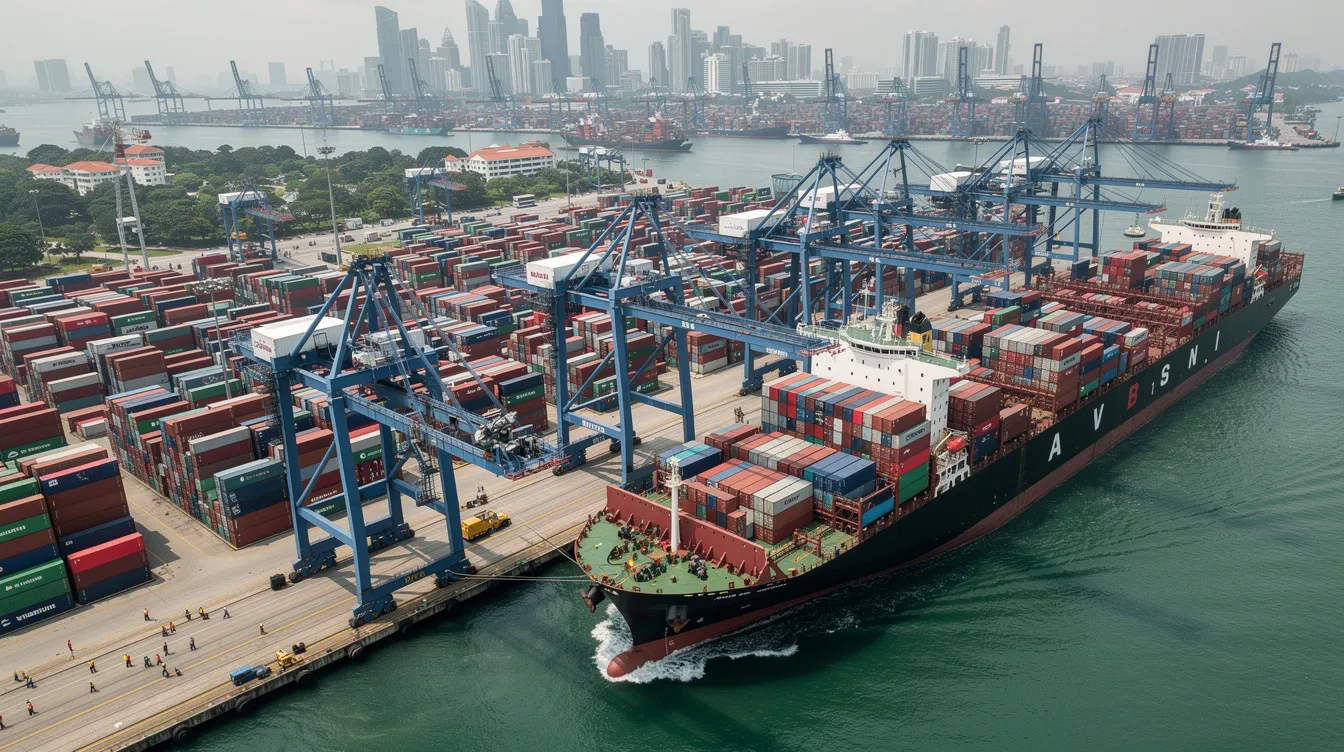
SINGAPORE – During the 80th anniversary dinner of the Singapore Port Workers Union (SPWU) on October 17, Senior Minister Lee Hsien Loong highlighted the necessity of a robust partnership among unions, port management, and the government to protect port workers from the impacts of technological disruption and evolving global trade dynamics.
Lee emphasized that continuous reskilling is crucial for workers to transition into higher-value, technology-driven roles, which are essential for safeguarding their long-term livelihoods. He said that as in past waves of transformation, workers must not be left to face these changes alone, calling for a strong and well-led SPWU to collaborate effectively with the PSA management.
“As in past waves of transformation, workers must not be left to face these changes alone.”Lee Hsien Loong, Senior Minister
The port industry has a history of transformation, from manual stevedoring to the use of automated guided vehicles. Each transition has seen the PSA retrain workers for new roles, with union leaders encouraging a flexible mindset among workers, according to Lee. He noted that the SPWU currently represents over 10,000 members across various organizations, including PSA Corporation and PSA International.
Lee also addressed the current challenges facing the port sector, including supply chain disruptions, climate change, and geopolitical tensions. He pointed out that advancements in AI and automation are set to dramatically alter port operations, with repetitive tasks potentially being handled by artificial intelligence in the future. He said green fuels such as ammonia and methanol will require new processes, skills, and safety protocols.
“Green fuels such as ammonia and methanol will require new processes, skills, and safety protocols.”Lee Hsien Loong, Senior Minister
To navigate these challenges, Lee reaffirmed the government's commitment to supporting the transition and called for a renewed tripartite compact to ensure job security and equitable sharing of the benefits of future growth among port employees. Singapore's port achieved a record handling of 44.66 million twenty-foot equivalent units (TEUs) in 2025, surpassing the previous year's 41.12 million, reflecting the port's ongoing growth.
Looking ahead, the fully consolidated Tuas Port is projected to have a capacity of 65 million TEUs by the 2040s. Lee emphasized that this growth was unimaginable in 1965, underscoring the importance of mutual trust forged through organizational change and personal adjustment. He said the SPWU has shown a forward-looking approach, unlike other port unions that resist technological advancements, which he said led to their members suffering as their ports lagged behind.
“Over time their ports suffered, and so did their members.”Lee Hsien Loong, Senior Minister
In line with Singapore's commitment to maritime innovation, the Maritime and Port Authority of Singapore (MPA) is advancing automation technologies. Recent initiatives include the deployment of automated guided vehicles and automated quay cranes at Tuas Port, significantly enhancing operational efficiency and safety. Furthermore, the MPA is exploring the feasibility of autonomous vessels for inter-terminal container transport, which could create new job opportunities in remote vessel monitoring and maritime data analysis.
As the maritime sector continues to evolve, the government is also focusing on decarbonization efforts, with plans for all harbor craft operating in Singapore's ports to be fully electric or powered by net-zero emissions fuels by 2030. This includes ongoing research into ammonia and methanol as alternative fuels, which aligns with Singapore's broader sustainability goals.