Singapore
Singapore Expands Elite Visa Program to Attract Top Fund Managers
The Monetary Authority of Singapore unveils measures to enhance the city-state's asset management sector amid intensifying regional competition.
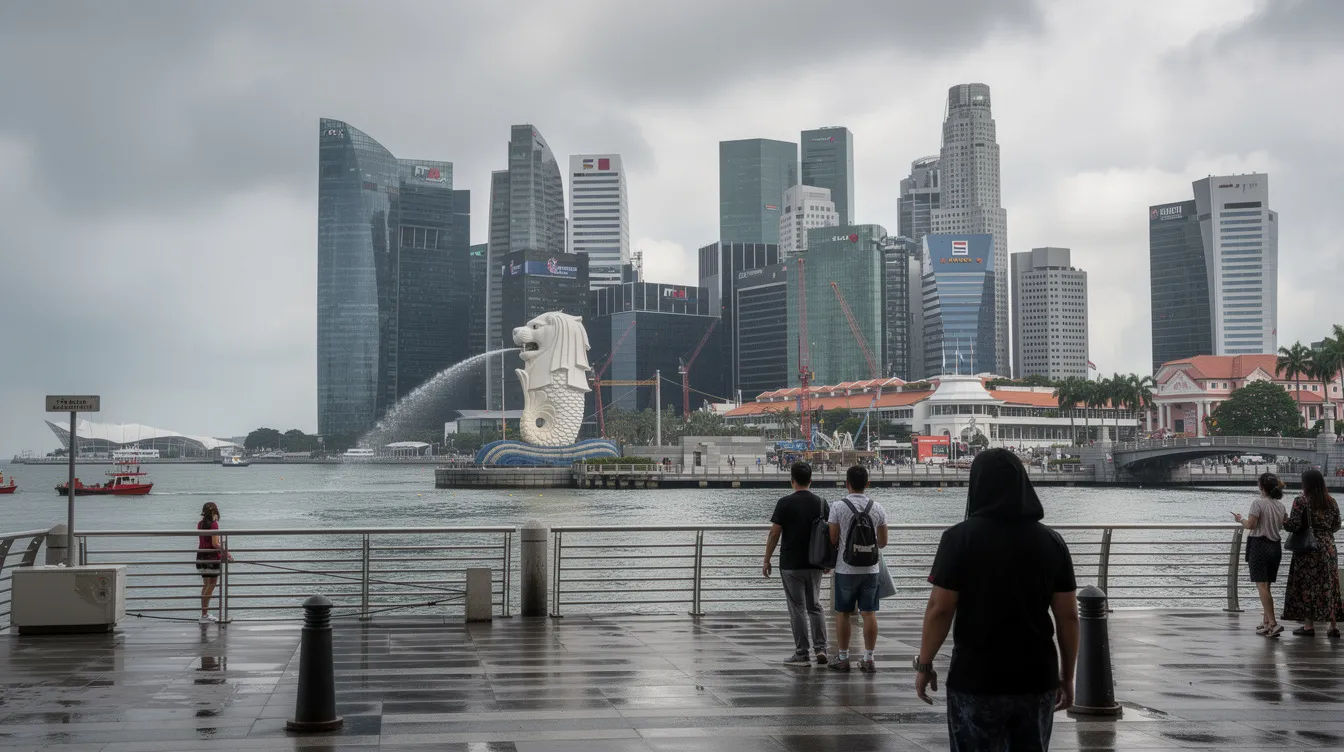
Singapore is taking significant steps to enhance its position as a leading asset management hub in Asia. On August 19, the Monetary Authority of Singapore (MAS) announced a series of initiatives designed to attract top foreign finance professionals, including an expansion of its elite visa program.
The new measures include the introduction of an Investment Management Track under the Ministry of Manpower’s Overseas Networks and Expertise (ONE) Pass framework. This track aims to attract senior investment professionals and global leaders who can contribute significantly to Singapore's asset management industry. Currently, candidates for the ONE Pass must meet a minimum monthly salary of S$30,000 (approximately USD 22,000) or demonstrate outstanding achievements in their fields.
“Chee Hong Tat, Minister for National Development, expressed the desire to grow Singapore's position as an international financial sector.”Chee Hong Tat, Minister for National Development
Additionally, MAS revealed plans for a tax exemption on profit-related returns from fund management services provided to qualifying funds. This exemption is expected to incentivize fund managers to anchor their business operations in Singapore. Furthermore, a new hedge fund investment program will be introduced to attract both global and regional players to the city-state.
According to MAS, the asset management sector is a crucial growth engine for Singapore's financial landscape, contributing around 15% to the sector's output and employing approximately 25,000 individuals, 80% of whom are locals. Over the past five years, the industry has experienced an average growth rate of 7.5%, with total assets under management nearing S$7 trillion (USD 5.5 trillion).
“Chee Hong Tat, Minister for National Development, noted that the measures reflect Singapore’s continued commitment to strengthen the country’s value proposition and ensure it remains a trusted and globally competitive financial hub.”Chee Hong Tat, Minister for National Development
Minister for National Development Chee Hong Tat, who also serves as the deputy chairman of MAS, highlighted the importance of these measures in light of increasing competition from regional financial hubs like Hong Kong. He stated that he does not view competition with Hong Kong as a zero-sum game, suggesting that both cities can thrive as financial centers. However, he acknowledged the necessity for Singapore to continually reassess and adjust its policies to maintain its competitive edge.
Singapore’s asset management sector has been lagging behind Hong Kong, which has seen faster growth in assets under management (AUM). Analysts noted that Hong Kong's AUM grew 20% to reach a record high of HK$42.2 trillion (S$6.8 trillion) in 2025, while Singapore's AUM grew only 10% during the same period. This context underscores the urgency of Singapore's new measures, as industry observers emphasized that the timing is crucial in signaling the Republic’s ambitions to remain competitive in attracting top talent.
According to Suhaimi Zainul-Abidin, deputy chairman of the Singapore branch of the Alternative Investment Management Association (AIMA), “Every month of silence means you potentially lose a firm that may decide to place its next 20 hires elsewhere.” This sentiment reflects a broader concern within Singapore's financial community about the potential loss of investment talent to competing hubs.
While Singapore's initiatives aim to enhance its appeal, some analysts argue that they do not fully address the challenges of attracting younger talent through existing visa schemes. Suhaimi pointed out that the proposed measures largely target senior professionals, which could hinder the development of a robust pipeline of junior and mid-level talent necessary for long-term growth.
In contrast, Singapore's coverage of these developments has emphasized the strategic nature of the reforms, framing them as a proactive response to the competitive landscape. The Business Times highlighted that the measures send a “strong signal” of Singapore’s commitment to growing the sector, especially amid concerns about losing investment mandates to competing financial centers.
These initiatives are set to take effect in 2027, with further details to be disclosed during the upcoming 2027 Budget announcement. The proactive approach by Singapore's government reflects its commitment to solidifying the city-state's status as a trusted and globally competitive financial hub.