Philippines
Revitalizing Okir: A Cultural Renaissance in Lanao del Sur
The recent Okir Art Exhibit in Lanao del Sur highlights the intersection of tradition and modernity among Maranao artists.
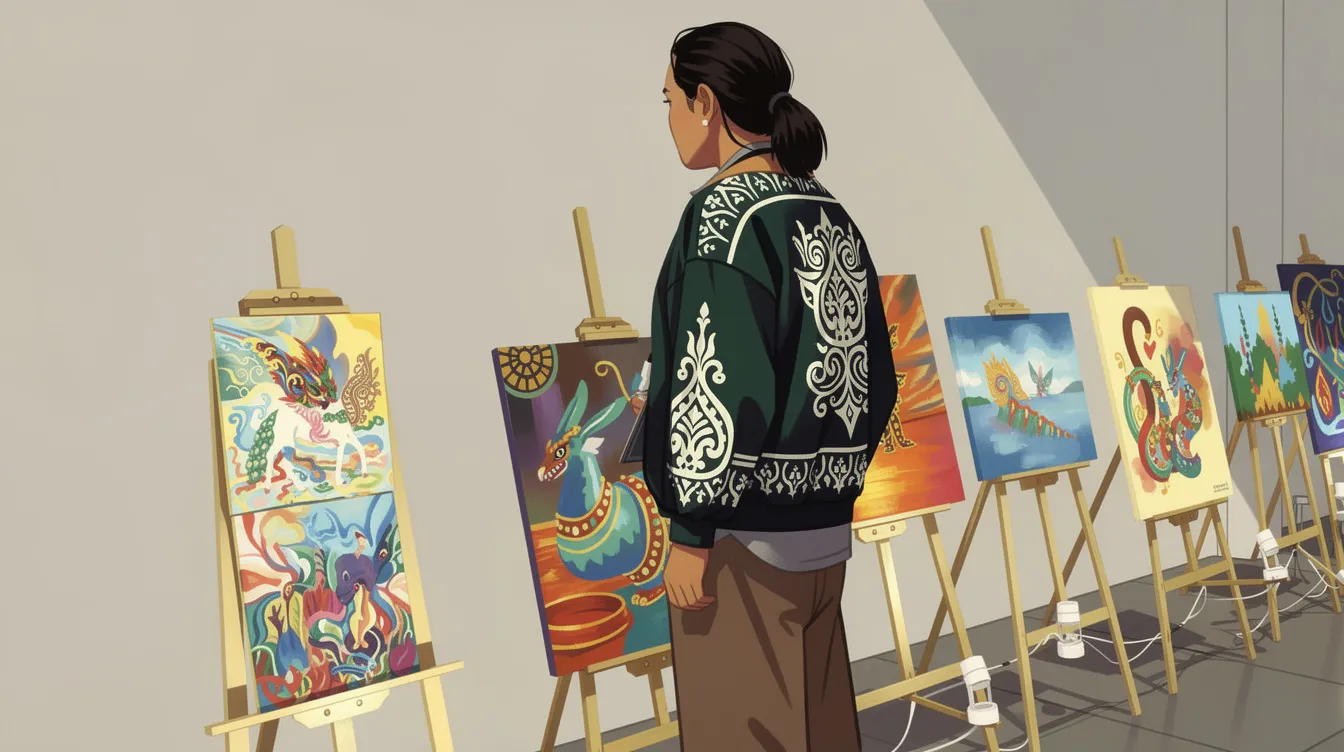
In Lanao del Sur, the intricate patterns of traditional Okir art are experiencing a renaissance, as evidenced by the recently concluded second Okir Art Exhibit. This event, organized in February by the provincial government alongside regional trade ministries, served not merely as a gallery showcase but as a vibrant convergence of master artisans and a new generation of Maranao artists.
The exhibit featured a range of Okir-inspired visual art, traditional crafts, live demonstrations, and cultural performances, fostering discussions on heritage and identity among artists, students, and the public. For artists like Walad Serad Solaiman, the exhibit was a crucial platform for recognition. Solaiman, a freelance visual artist, reinterprets traditional Okir patterns through contemporary themes, emphasizing the importance of evolving cultural expressions.
“This helps because it gave us another glimmer of hope to showcase our works.”Walad Serad Solaiman, freelance visual artist
Solaiman noted that the exhibit provided a glimmer of hope to showcase their works, stating that even a little exposure is a huge help to artists and artisans. Coming from a lineage of artists, Solaiman has utilized his craft to finance his education and has gained recognition as an Ambassador of Goodwill in Artistry at Mindanao State University. He views Okir not as a static historical design, but as an evolving expression of identity, emphasizing that it shows he is a Bangsamoro artist, a Maranao, and also a Filipino.
Despite the challenges faced by emerging artists in the region, such as limited access to materials and lesser recognition compared to established artisans, events like the Okir Art Exhibit provide a sense of appreciation and validation. Solaiman mentioned that spaces like this make younger artists feel valued.
Visitors to the exhibit echoed this sentiment. Alyza June Lisana, a student from Liceo de Cagayan University, expressed her admiration for the craftsmanship and the cultural significance embedded within the artworks. She remarked that these artworks are unique and handmade, highlighting how Maranao artists use what they have around them to create something meaningful, and reflecting on how learning about the culture deepened her appreciation of the art.
“These artworks are unique and handmade. You can really see how Maranao artists use what they have around them to create something meaningful.”Alyza June Lisana, student
The organizers of the exhibit view it as both a means of cultural preservation and a developmental platform, allowing artists to innovate and reach broader audiences. For Solaiman, the key for young artists lies in persistence and bridging the gap between cultural roots and future expressions. He advised to continue making art because one day they will be recognized and to be consistent with their craft.
Okir is a distinctive folk-art tradition of the Maranao and Iranun peoples of Mindanao, characterized by flowing, curvilinear designs that echo the rhythms of nature. This art form is not merely ornamental; it is a sophisticated visual language that articulates the rich cultural heritage and identity of the Bangsamoro region. The term itself refers to the act of carving or sculpting, with indigenous plant forms, particularly the pako rabong (growing fern), dominating its aesthetic.
“Just continue making art because one day you will be recognized.”Walad Serad Solaiman, freelance visual artist
Beyond botanical motifs, Okir incorporates powerful mythological symbols, such as the sarimanok, a legendary bird of fortune, and the naga, a stylized serpent-dragon, which signify prestige, power, and protection. Historically, the complexity of Okir carvings indicated the status and wealth of the residing datu (chief), serving a sociopolitical function while connecting to a precolonial Filipino past that later integrated Islamic artistic sensibilities.
Today, Okir remains a vital and evolving tradition, embodying the ingenuity of Filipino artists while captivating observers with its intricate beauty. The recent exhibit stands as a testament to the enduring spirit of the Maranao people, showcasing their commitment to preserving and innovating their cultural heritage.