Philippines
Philippines' Net Foreign Direct Investment Declines Nearly 24% Amid Global Uncertainty
Despite a six-month high in July, net foreign direct investments in the Philippines fell significantly in 2026 due to a combination of external and domestic factors.
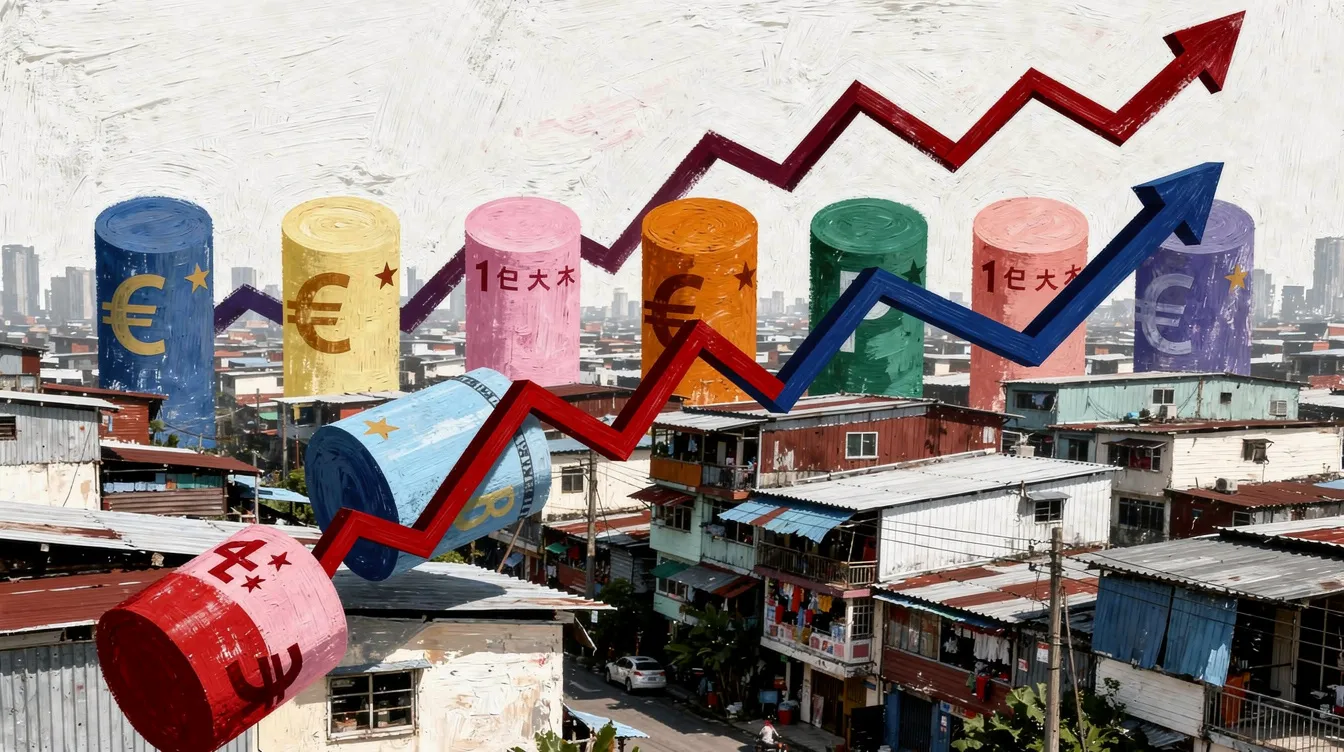
Net foreign direct investments (FDI) in the Philippines have experienced a notable decline, dropping by 23.9% in the first seven months of 2026 compared to the same period last year, according to data from the Bangko Sentral ng Pilipinas (BSP). Total inflows reached $4.07 billion, down from $5.35 billion in 2025. In July alone, net FDI inflows amounted to $689 million, a 44.1% decrease from $1.23 billion in July 2025, although it marked a month-on-month increase from June's $447 million.
Union Bank Chief Economist Ruben Carlo Asuncion attributed the decline to a mix of external and domestic factors. He noted that global investors have adopted a more cautious stance, influenced by elevated US interest rates, a stronger dollar, and ongoing geopolitical tensions, which have dampened risk appetite for emerging markets. Additionally, concerns regarding the Philippine peso's weakness and market volatility have further impacted investor sentiment.
“Ruben Carlo Asuncion said the month-on-month rebound likely reflected continued investment activities as well as the resumption or launch of some projects after previous delays.”Ruben Carlo Asuncion, Chief Economist, Union Bank
Despite the year-on-year decline, July's FDI inflows represented the highest monthly figure in six months, reflecting renewed investment activities following previous delays. Asuncion said the month-on-month rebound likely reflected continued investment activities as well as the resumption or launch of some projects after previous delays. This sentiment was echoed by John Paolo R. Rivera, a senior research fellow at the Philippine Institute for Development Studies, who noted the month-on-month increase as an encouraging sign for the country's investment climate.
However, the data shows mixed trends across FDI components. Equity capital placements fell by 55.5% in July to $186 million from $418 million a year earlier, while reinvestments of earnings rose to $138 million, up 39.9% from $99 million in July 2025. Net investments in debt instruments decreased by 49.1% in July to $365 million from $717 million in July 2025. For the January to July period, equity capital placements dropped by 6.9% to $675 million from $725 million, reinvestments of earnings declined by 14.2% to $968 million from $1.13 billion, and net investments in debt instruments fell by 30.6% to $2.43 billion from $3.49 billion.
“John Paolo R. Rivera noted the month-on-month increase in FDI as an encouraging sign, possibly reflecting renewed investment activity and the timing of intercompany financing and equity placements.”John Paolo R. Rivera, Senior Research Fellow, Philippine Institute for Development Studies
Looking forward, Asuncion expressed caution regarding the sustainability of FDI inflows, stating that while outflows could remain elevated in the near term, their trajectory will likely depend on whether external conditions become more supportive and whether investor confidence in the Philippines’ growth and policy outlook improves. The BSP expects net FDI to reach $6.5 billion in 2026 and $8 billion in 2027, though these figures may be subject to fluctuations based on the evolving economic landscape.
Overall, the decline in FDI highlights the challenges the Philippines faces in attracting foreign investments amid a backdrop of global economic uncertainty and domestic economic pressures.