Philippines
Philippines Central Bank Raises Interest Rates Amid Inflation Concerns
The Bangko Sentral ng Pilipinas increases rates to combat inflation driven by external shocks and local economic pressures.
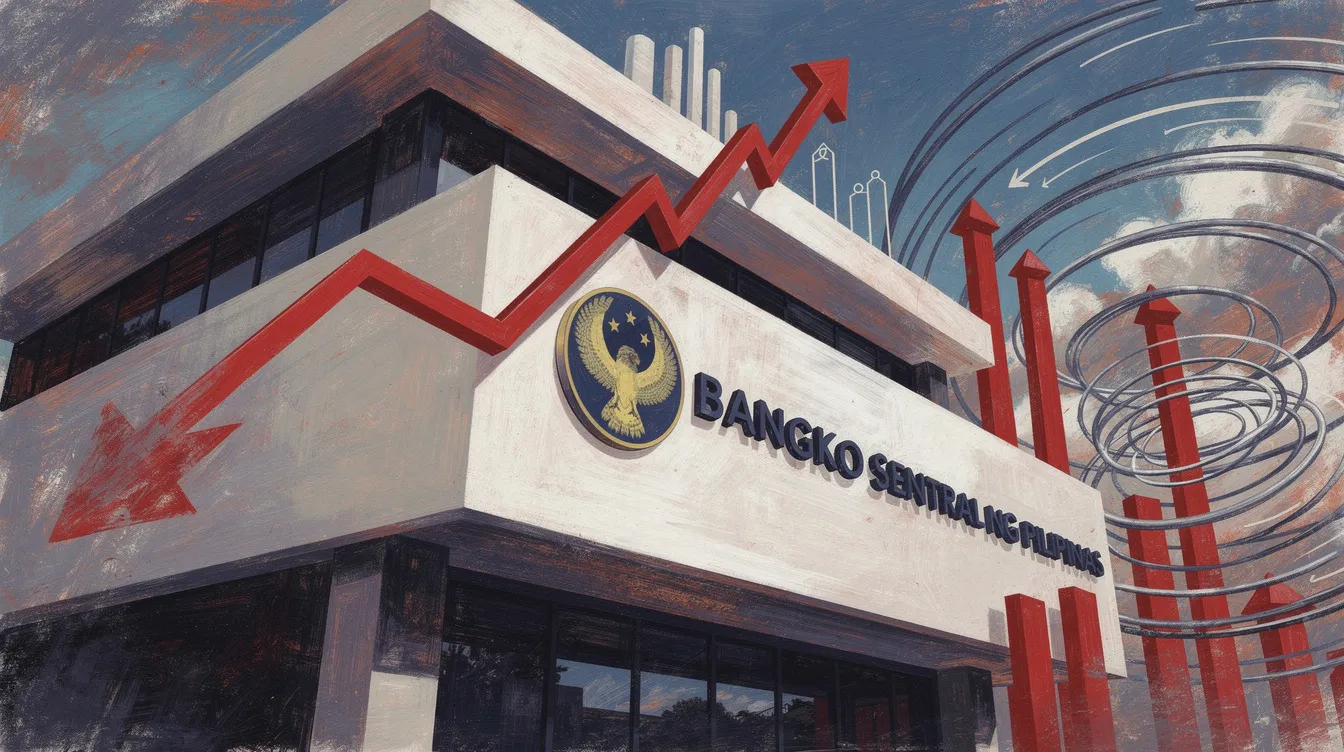
MANILA — In a decisive move to combat rising inflation, the Bangko Sentral ng Pilipinas (BSP) raised its benchmark interest rate by 25 basis points on Thursday, bringing it to 6.25%. This action comes as inflation has averaged 5% during the first seven months of the year, exceeding the central bank's target range of 2% to 4%. The BSP's decision reflects a response to various economic pressures, including the ongoing Iranian energy crisis, which has been affecting global oil prices and, consequently, local inflation rates.
Philippine outlets have highlighted that the BSP projected inflation could accelerate to as high as 6.5% in August, driven by higher food and fuel prices, as reported by the Manila Times. This projection aligns with the BSP's concerns about the impact of the Iranian energy crisis, but it also emphasizes local factors such as the El Niño phenomenon, which could exacerbate food supply issues.
In addition to inflationary pressures, the Philippines is grappling with a widening trade deficit, which reached nearly $6 billion in July, a 34.9% increase from the previous year. This trade gap highlights the country’s reliance on imports, particularly for electronics and fuel, which have been significantly impacted by rising global prices due to geopolitical tensions, including the conflict in the Middle East. The Philippine Statistics Authority reported that imports surged by 19.8% to $14.12 billion, while exports grew by 10.8% to $8.15 billion, resulting in a persistent trade deficit that has now been ongoing for over a decade.
Indonesian coverage stressed the importance of the BSP's actions in maintaining economic stability, noting that the rate hike aims to mitigate inflationary pressures while addressing concerns about weak economic growth. However, Philippine outlets framed the situation as increasingly precarious, with the BSP's inflation forecast reflecting significant risks from both external shocks and local conditions, including unfavorable weather and rising minimum wages.
Officials noted that the energy crisis in Iran has led to increased volatility in energy markets, impacting the Philippines' import costs and overall inflation. The BSP's rate hike aims to mitigate these inflationary pressures while also addressing concerns about weak economic growth, which has been a persistent issue in the country. Analysts from various financial institutions had anticipated this move, citing the necessity for the BSP to maintain its inflation-targeting framework amidst these challenges.
Moreover, local factors such as the El Niño phenomenon and recent adjustments to the minimum wage in Metro Manila could further complicate the inflation landscape. The Department of Agriculture has warned that El Niño may exacerbate food supply issues, potentially reversing gains made in stabilizing food prices. This situation creates a complex backdrop for the BSP as it navigates the delicate balance between controlling inflation and supporting economic growth.
BSP Governor Eli Remolona Jr. indicated that the central bank is prepared to implement additional rate hikes if inflationary pressures persist, emphasizing the importance of maintaining a stable economic environment. The BSP's actions will be closely monitored by investors and analysts alike, as they seek to understand the implications for the broader economy and financial markets.
In contrast to the Indonesian perspective, which focused on the broader implications of the rate hike for regional stability, Philippine media underscored the immediate challenges posed by rising food prices and the potential for further inflationary surprises. The BSP's latest inflation projections indicate a cautious approach, with expectations of inflation settling at 6.1% by yearend, slower than its previous estimate but still significantly above the target range. This framing reflects a sense of urgency among Philippine outlets regarding the economic pressures faced by consumers and businesses alike.