Philippines
AI Innovations in Early Alzheimer's Detection: A New Frontier
Recent advancements in artificial intelligence and blood testing may revolutionize the early detection of Alzheimer's disease, offering hope for better patient outcomes.
According to the World Health Organization (WHO), approximately 57 million individuals worldwide are currently living with dementia, with Alzheimer's disease constituting around 60 to 70 percent of these cases. Each year, nearly 10 million new diagnoses are made, a figure projected to rise sharply as global populations continue to age.
Traditionally, confirming an Alzheimer's diagnosis has relied on costly positron emission tomography (PET) scans or invasive procedures like spinal taps. However, recent developments in blood-based testing present a more affordable and less invasive alternative. As new therapies aimed at modifying the disease become available, early identification of patients is crucial, as these treatments are most effective before significant brain damage occurs.
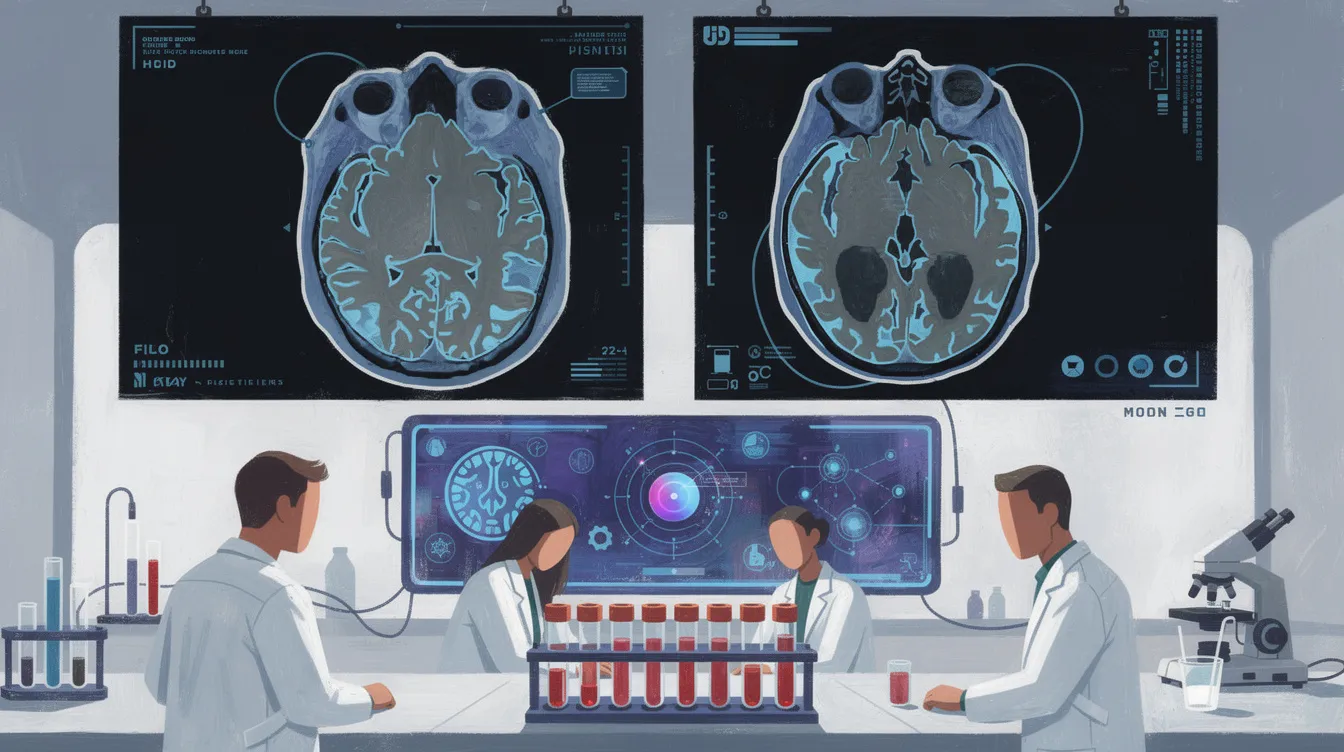
Researchers are now leveraging blood-based biomarkers, artificial intelligence, and digital health technologies to detect the earliest biological indicators of Alzheimer's. Notably, studies have identified phosphorylated tau 217 (p-tau217) as a reliable blood biomarker. A significant study published in the Journal of the American Medical Association validated that plasma p-tau217 testing is as accurate as cerebrospinal fluid analysis for diagnosing Alzheimer's, reducing the need for confirmatory PET scans by approximately 80 percent.
Building on this research, researchers led by Dr. Randall Bateman and Dr. David Holtzman at Washington University have developed a method to predict when an individual may begin exhibiting symptoms of Alzheimer's through a single blood test. This innovation is now being commercialized by C2N Diagnostics, which offers the PrecivityAD2 blood test, a leading assay for measuring p-tau217 and other biomarkers.
“Language serves as a digital biomarker reflecting the health of the brain itself.”Dr. Neguine Rezaii, Lead Investigator
In addition to blood tests, artificial intelligence is playing an increasingly vital role in diagnostics. Researchers at Mass General Brigham have demonstrated that AI can identify signs of Alzheimer's by analyzing voice recordings. Their study involved 120 participants with cognitive impairment and 68 cognitively healthy individuals, all of whom underwent amyloid PET imaging for confirmation. The AI models achieved remarkable accuracy, identifying mild cognitive impairment with approximately 99 percent accuracy and distinguishing Alzheimer's-related decline from other causes with up to 90 percent accuracy.
These AI systems focus on subtle linguistic patterns that may go unnoticed by humans, such as the omission of key details and the use of shorter, less descriptive sentences. Such changes in speech can reflect cognitive decline years before dementia becomes clinically evident. Lead investigator Dr. Neguine Rezaii emphasized the potential of language as a digital biomarker, suggesting that if validated in larger studies, speech analysis could serve as an inexpensive and scalable method to flag patients for further neurological evaluation.
Despite the promising developments, experts caution that this field is still evolving. Many proposed blood tests require larger clinical studies to ensure they consistently improve patient outcomes while minimizing false positives and negatives. Furthermore, physicians will need clear evidence-based guidelines on when to order additional tests and how to interpret increasingly complex molecular data.