Myanmar
UN Launches Emergency Aid Amid Flooding in Myanmar's Ayeyarwady Region
The World Food Programme responds to severe flooding impacting thousands in Myanmar, as the nation faces a deepening hunger crisis.
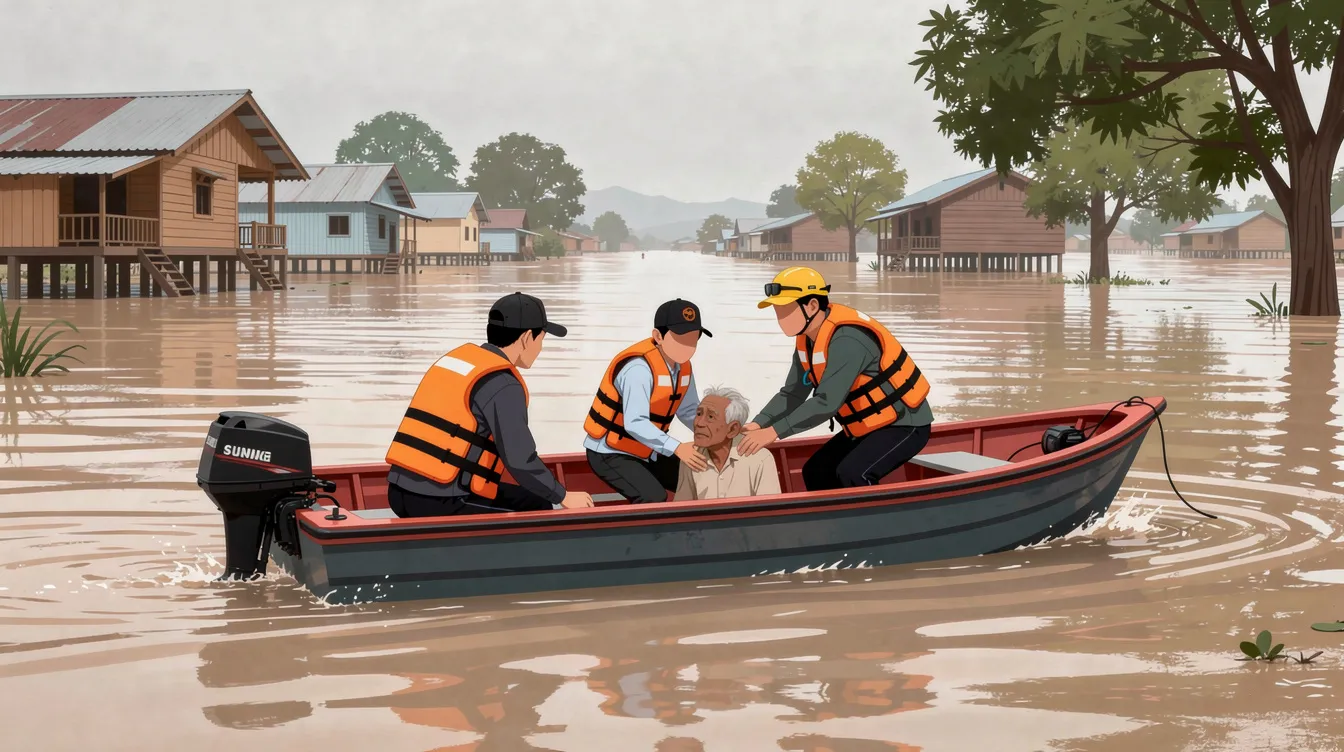
The United Nations World Food Programme (WFP) has commenced emergency relief efforts in Myanmar's Ayeyarwady Region, particularly in Leymyethna Township, where heavy monsoon rains have caused significant flooding. This natural disaster threatens to deepen the already critical hunger crisis affecting millions across the country.
Since late July, torrential rains have breached river embankments, inundating agricultural valleys and impacting over 32,000 people across 98 villages and five urban wards in Leymyethna, according to WFP assessments. Michael Dunford, WFP Representative and Country Director in Myanmar, highlighted the dire circumstances, stating that flooding is a recurring threat, but this year it is impacting communities already battered by multiple underlying crises. Families who were already struggling to put food on the table are now facing flooded homes, damaged crops, contaminated water sources, and disrupted markets.
“Flooding is a recurring threat, but this year it is impacting communities already battered by multiple underlying crises.”Michael Dunford, WFP Representative and Country Director in Myanmar
The recent flooding compounds an existing humanitarian crisis in Myanmar, where an estimated 12.4 million people are currently experiencing acute food insecurity. This situation has been exacerbated by ongoing civil conflict, economic challenges, and soaring food prices. WFP has urgently appealed for funding and access to all affected regions to mitigate the worsening disaster.
“WFP is moving quickly to provide immediate food assistance, but the situation could deteriorate fast if floodwaters persist.”Michael Dunford, WFP Representative and Country Director in Myanmar
In response to the immediate needs, WFP has dispatched 20 metric tons of fortified biscuits to local partners in the Ayeyarwady Region, sufficient to assist around 10,000 people. Distributions are currently underway, with the organization emphasizing the need for sustained access and funding to prevent further deterioration of the situation. Dunford noted that WFP is moving quickly to provide immediate food assistance, but the situation could deteriorate fast if floodwaters persist.
As the floods continue to affect various regions, WFP is monitoring the situation closely and is prepared to scale up food assistance as necessary. The organization aims to support local humanitarian efforts and ensure that the basic needs of the affected populations are met.
Myanmar's media has also reported on the flooding, focusing on the government's response and the broader implications for the nation's stability. According to local outlets, the military regime has been criticized for its slow reaction to the crisis, with some reports indicating that inadequate infrastructure and lack of preparedness have exacerbated the situation. While WFP's efforts are being recognized, there is a prevailing sentiment that the regime's focus remains on political control rather than humanitarian needs.
In contrast, Indonesian coverage of the flooding has emphasized the urgent humanitarian response from international organizations like the WFP, framing it as a critical intervention in a country facing multiple crises. Indonesian reports have highlighted the need for global support and cooperation to address the humanitarian challenges, whereas Myanmar's coverage tends to reflect a more insular perspective, concentrating on internal governance issues and the regime's narrative.
This divergence illustrates the contrasting priorities between the two nations, with Indonesia advocating for a more collaborative international approach to humanitarian aid, while Myanmar's state-controlled media often downplays external assistance in favor of showcasing the government's efforts, despite the criticisms of its response.