Myanmar
Ongoing Humanitarian Crisis: IDP Camps in Myanmar Struggle for Survival
Displaced individuals in Myanmar face dire conditions as conflict and natural disasters exacerbate food insecurity and humanitarian needs.
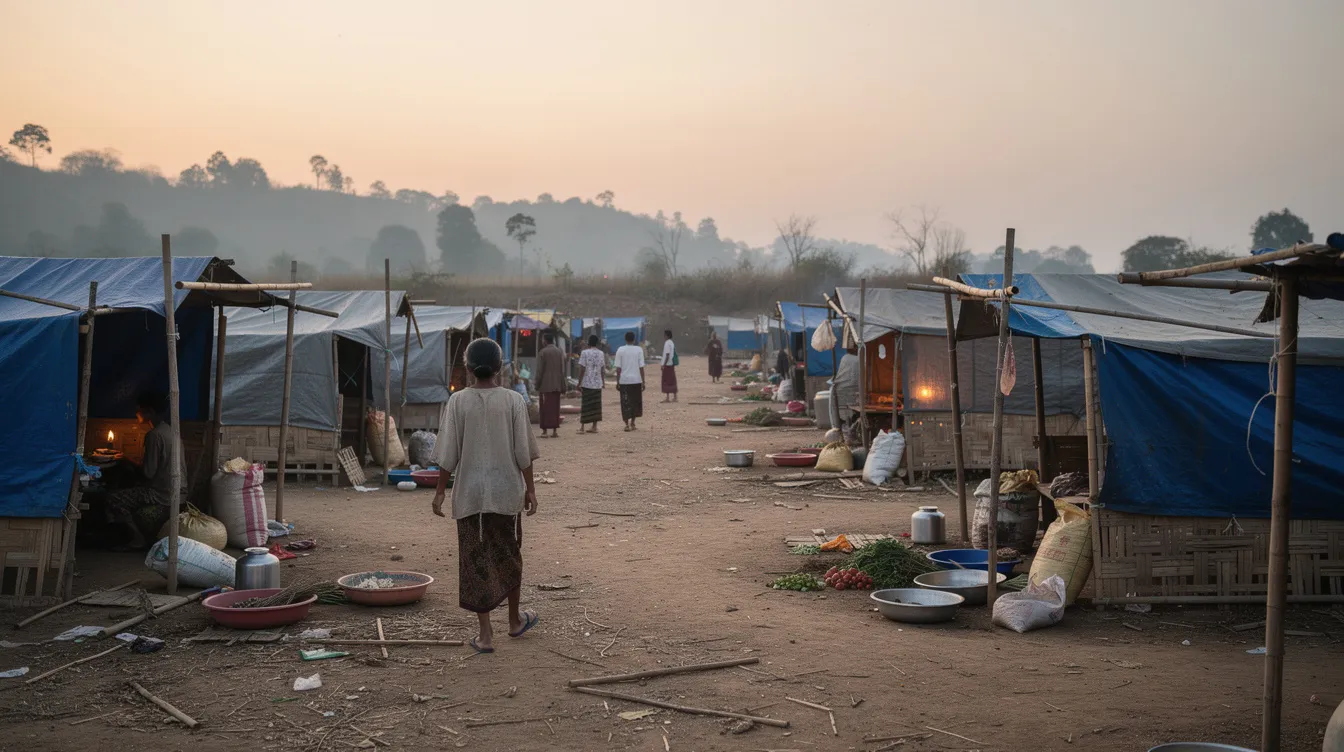
Internally displaced persons (IDPs) in Myanmar are facing increasingly dire conditions as they attempt to survive amidst ongoing conflicts and natural disasters. Reports indicate that over 12 million people are currently experiencing acute food insecurity, with 3.7 million displaced due to violence and instability since the military coup in February 2021.
The World Food Programme (WFP) has highlighted the alarming situation, noting that the humanitarian crisis is compounded by rising food prices and a lack of adequate support. According to WFP's Myanmar representative, Michael Dunford, the situation is not solely driven by local conflicts but is also influenced by global economic pressures affecting food availability and affordability. He stated, "The humanitarian conditions in Myanmar are not just based on domestic issues; global impacts are also directly affecting families and communities."
In May 2026, the European Union announced an emergency aid package of €8 million (approximately $8.7 million) through the WFP to address urgent food and nutritional needs. This funding aims to provide special nutritional support for pregnant and breastfeeding women and children, highlighting the critical need for assistance in the face of escalating food insecurity.
“The humanitarian conditions in Myanmar are not just based on domestic issues; global impacts are also directly affecting families and communities.”Michael Dunford, WFP Myanmar Representative
Reports from various sources indicate that food prices across Myanmar have surged by as much as 18%, with certain regions experiencing even higher increases. For example, food prices in Magway Region have risen by 38%, while Kayin State and Rakhine State have seen increases of 32% and 31%, respectively. These price hikes are placing immense pressure on families already struggling to meet their basic needs.
The ongoing conflict has not only displaced millions but has also severely disrupted agricultural activities, further exacerbating food shortages. The combination of political instability, natural disasters, and increased military spending has led to a significant decline in economic stability, as noted by analysts. The humanitarian situation is becoming increasingly critical, with many families requiring urgent assistance to survive.
As the crisis deepens, the international community is urged to respond proactively. The WFP has called for increased support to address the immediate needs of those affected by the conflict and to help stabilize the situation. The agency's ongoing efforts aim to provide essential food aid and nutritional support to the most vulnerable populations.