Myanmar
Deportation Crisis: Myanmar Refugees Trapped at India-Myanmar Border
A significant number of Myanmar refugees face dire conditions after being deported from India, as tensions between communities in Manipur escalate.
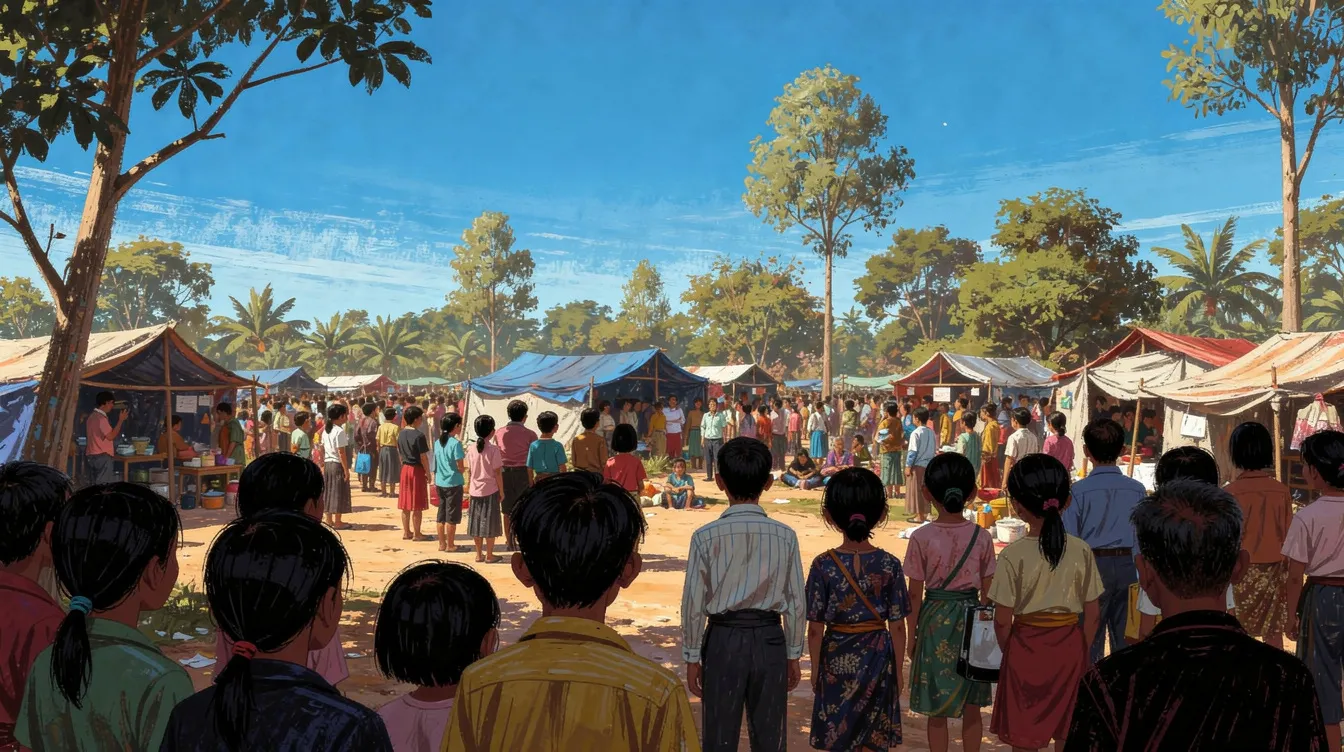
Thousands of Myanmar refugees are currently trapped in makeshift displacement camps along the 247-mile (398-km) border with India, following their deportation from Manipur State. According to reports from DVB, these individuals have been without any form of humanitarian assistance since their return, unable to access their home villages in Tamu Township due to ongoing conflict and instability.
Manipur's Home Minister Konthoujam Govindas announced in early September that 14,992 of the 24,475 Myanmar nationals categorized as "illegal immigrants" had been deported, although details regarding the timeline of these deportations remain unclear. The deportations have been linked to rising intercommunal violence in Manipur, particularly between the Kuki and Meitei communities, which has resulted in 70 deaths and 231 injuries this year.
“The forcible return of Myanmar refugees from Manipur violates the principle of non-refoulement under international law.”Mandira Sharma, ICJ Senior International Legal Adviser
The Chin National Front, an ethnic armed group, stated it does not control any territory outside of Chin State and therefore cannot provide protection to the displaced residents in Sagaing. The Myanmar military has recaptured key outposts along the Kalay–Tamu highway, a critical segment of the India–Myanmar–Thailand Trilateral Highway.
“Mizoram has adopted a more welcoming approach towards Myanmar refugees due to historical and ethnic ties.”K. Sapdanga, Mizoram State Home Minister
In contrast to Manipur's approach, Mizoram State has welcomed Myanmar refugees, with Home Minister K. Sapdanga reporting that approximately 29,575 refugees have been living there, with 99% biometrically registered. This welcoming stance is attributed to historical and ethnic ties between the Mizo and Chin communities, which differ significantly from the tensions observed in Manipur.
Human rights organizations, including the International Commission of Jurists (ICJ), have condemned the deportations, asserting that they violate the principle of non-refoulement under international law. Mandira Sharma, ICJ Senior International Legal Adviser, highlighted the risks faced by deported individuals, including exposure to violence and human rights violations perpetrated by the Myanmar military. Reports indicate that the ongoing conflict has led to widespread abuses, including extrajudicial killings and forced recruitment, particularly in areas along the border.