Indonesia
Indonesia's New Export Monitoring Body to Oversee $70 Billion in Commodities
The establishment of PT Danantara Sumberdaya Indonesia aims to enhance transparency in the export of coal, palm oil, and ferroalloy, which together account for significant revenue.
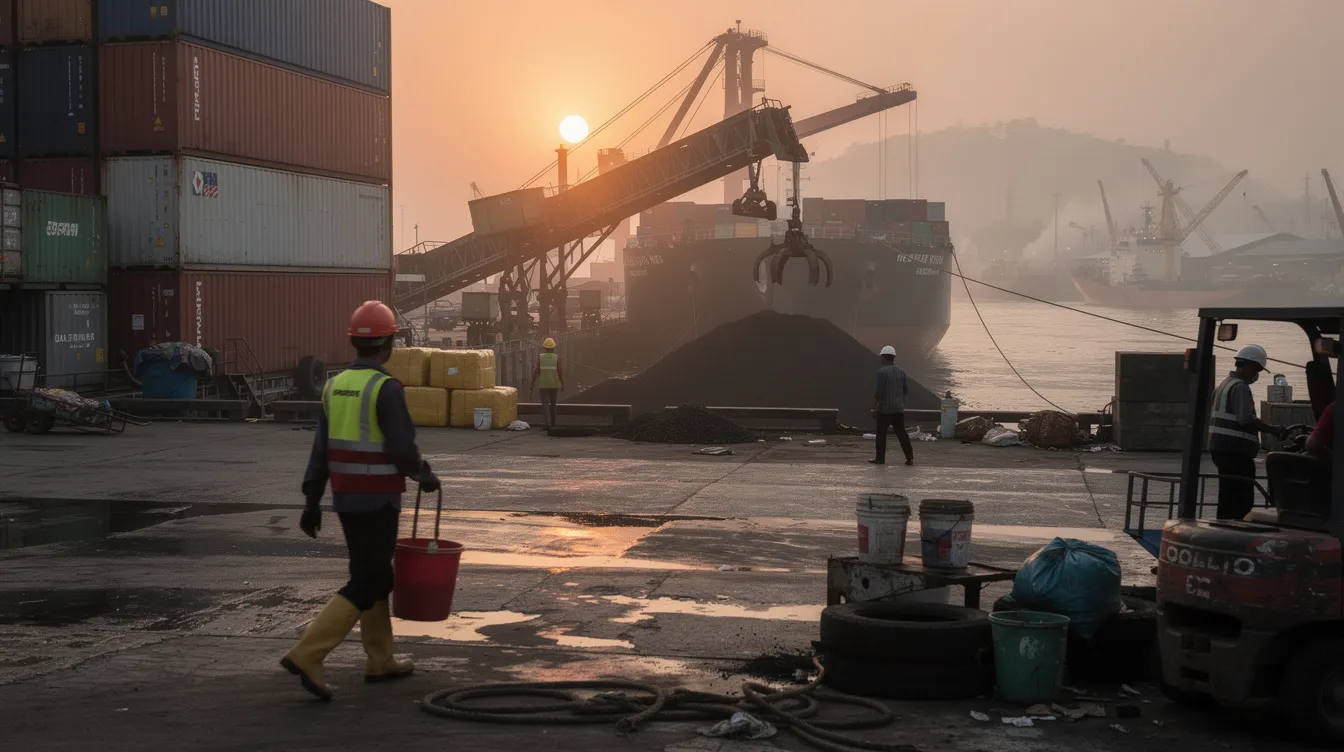
In a move to strengthen the governance of its natural resource exports, Indonesia has officially launched PT Danantara Sumberdaya Indonesia (DSI), a state-owned enterprise tasked with monitoring transactions of three strategic commodities: coal, crude palm oil (CPO), and ferroalloy. The initiative is expected to enhance transparency in a sector that generates approximately $70 billion annually.
According to Rosan Roeslani, CEO of Danantara, the value of these exports is significant, with coal exports estimated at around $30.35 billion, CPO at approximately $22.87 billion, and ferroalloy at about $16.43 billion. He emphasized that DSI's role is not to disrupt existing commercial relationships but to ensure that transactions are transparent and traceable, thereby benefiting the Indonesian economy. Roeslani stated during the launch event held in Jakarta that the aim is to improve governance of these three commodities, which are crucial for Indonesia's economy.
DSI's establishment follows the issuance of Government Regulation No. 24 of 2026, which outlines the new framework for the export of strategic natural resources. This regulation, signed by President Prabowo Subianto, will take effect on June 1, 2026. Roeslani clarified that DSI is not intended to add bureaucratic layers or replace existing regulatory bodies. Instead, it aims to create a robust verification point for export data, covering aspects such as quantity, quality, classification, pricing, and payment processes.
Roeslani explained that the agency's function is critical in combating issues like transfer pricing that have plagued the sector. The emphasis on transparency is seen as vital for maintaining the integrity of Indonesia’s export practices.
Roeslani also highlighted the collaborative nature of DSI's operations, stating that success in this endeavor requires support from various stakeholders, including ministries, regulatory bodies, and industry players. He expressed gratitude for the cooperation received thus far, which has facilitated the integration of data necessary for effective decision-making.
As Indonesia seeks to position itself competitively in the global market, the establishment of DSI is viewed as a strategic step towards ensuring that its natural resources are managed sustainably and profitably. The government hopes that by enhancing transparency and governance in the export sector, it can attract more investments and improve overall economic performance.