Indonesia
Indonesia Seeks Exemption from U.S. Tariffs on Palm Oil Exports
The Indonesian government is lobbying for an exemption from a 10% tariff imposed by the U.S. on palm oil and other natural resource-based products.
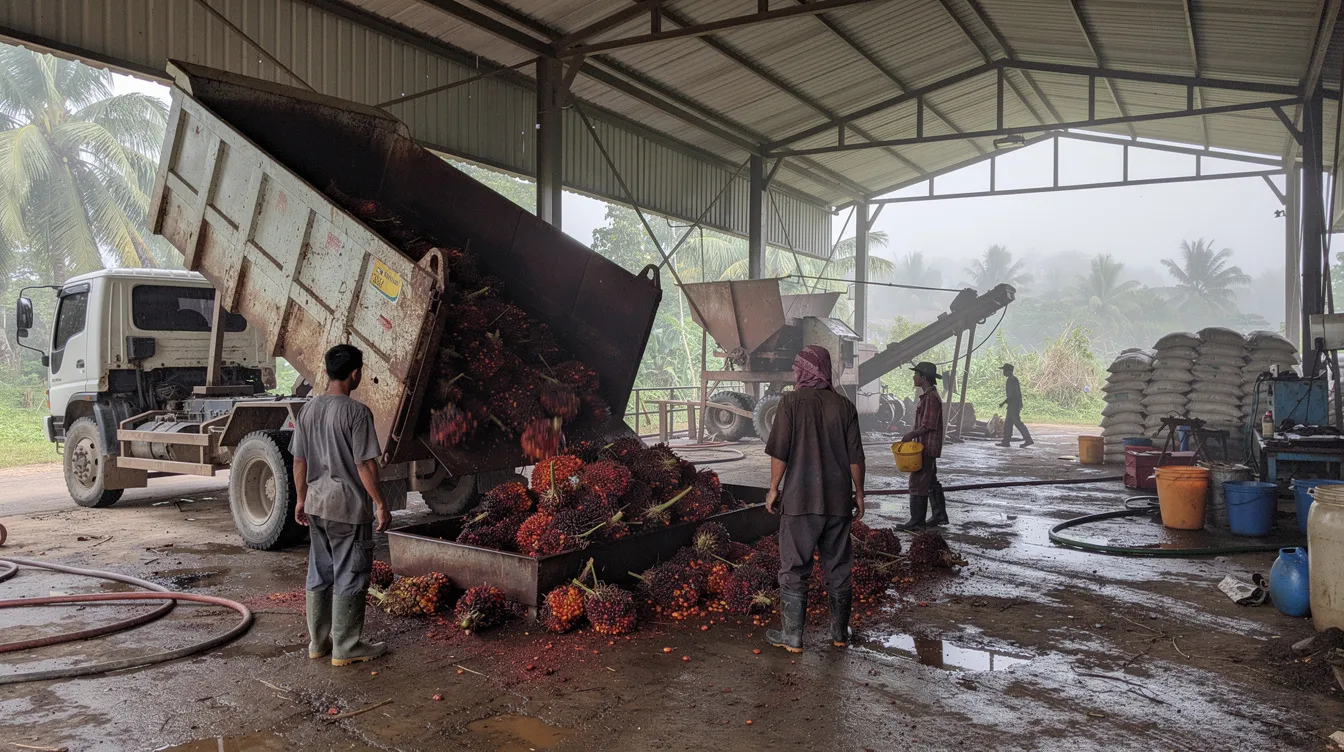
Indonesia is currently lobbying the United States for an exemption from a 10% tariff on palm oil exports, a significant commodity for the country's economy. Coordinating Minister for Economic Affairs Airlangga Hartarto announced the government's efforts during a press conference in Jakarta, highlighting that palm oil is among several natural resource-based products targeted for tariff relief.
Airlangga Hartarto stated that the government is requesting that palm oil be exempted from the tariff, emphasizing the importance of this commodity to Indonesia's agricultural sector. The tariff is part of a broader trade policy under Section 301 of the Trade Act of 1974, which addresses issues related to forced labor and excess production capacity. The U.S. government is currently conducting investigations into these matters, and Indonesia's compliance has reportedly improved, with Hartarto noting that the number of countries deemed compliant has increased from six to 17.
“We are requesting that palm oil be exempted from the tariff.”Airlangga Hartarto, Coordinating Minister for Economic Affairs
In addition to palm oil, the Indonesian government is advocating for various other commodities to receive a 0% tariff rate. Hartarto pointed out that many of these products are also derived from Indonesia's rich natural resources. However, he cautioned that the final tariff rates will depend on the outcomes of ongoing investigations by U.S. authorities.
“Indonesia's compliance has reportedly improved compared to other nations.”Airlangga Hartarto, Coordinating Minister for Economic Affairs
Indonesia's previous engagement with U.S. trade policies has been complex, especially regarding labor standards. The U.S. has raised concerns over labor practices in Indonesia, which has led to scrutiny under the new tariff regime. Hartarto indicated that while the situation is evolving, Indonesia's proactive measures to address these issues may influence the outcome of the tariff discussions.
Meanwhile, Cambodian officials have also weighed in on the implications of the new U.S. tariff. Deputy Prime Minister Sun Chanthol, who is also the First Vice President of the Council for the Development of Cambodia (CDC), clarified that the 10% tariff imposed on July 24 should not be viewed as an additional tax on the existing 19% reciprocal tariff. This distinction highlights Cambodia's perspective that the U.S. tariff is part of a broader trade strategy rather than merely an added burden on exporters.
While Indonesian coverage stressed the importance of lobbying for exemptions and the potential economic impact on its palm oil sector, Cambodia's outlets framed the tariff as a complex issue that should be understood in the context of existing trade frameworks. This divergence illustrates differing national interests: Indonesia focuses on immediate relief for its palm oil industry, while Cambodia emphasizes the structural implications of U.S. tariffs on its broader trade landscape.
The U.S. tariffs have had significant implications for various trading partners, including Indonesia and Cambodia. As the U.S. aims to reshape its trade relationships, the outcomes of both countries' lobbying efforts will be closely watched by industry stakeholders.