Indonesia
BRI Reports Strong Growth in Third-Party Funds Amid Digital Expansion
Bank Rakyat Indonesia (BRI) has successfully raised Rp1,580.7 trillion in third-party funds, reflecting a 6.7% year-on-year increase, driven by enhanced digital services and customer trust.
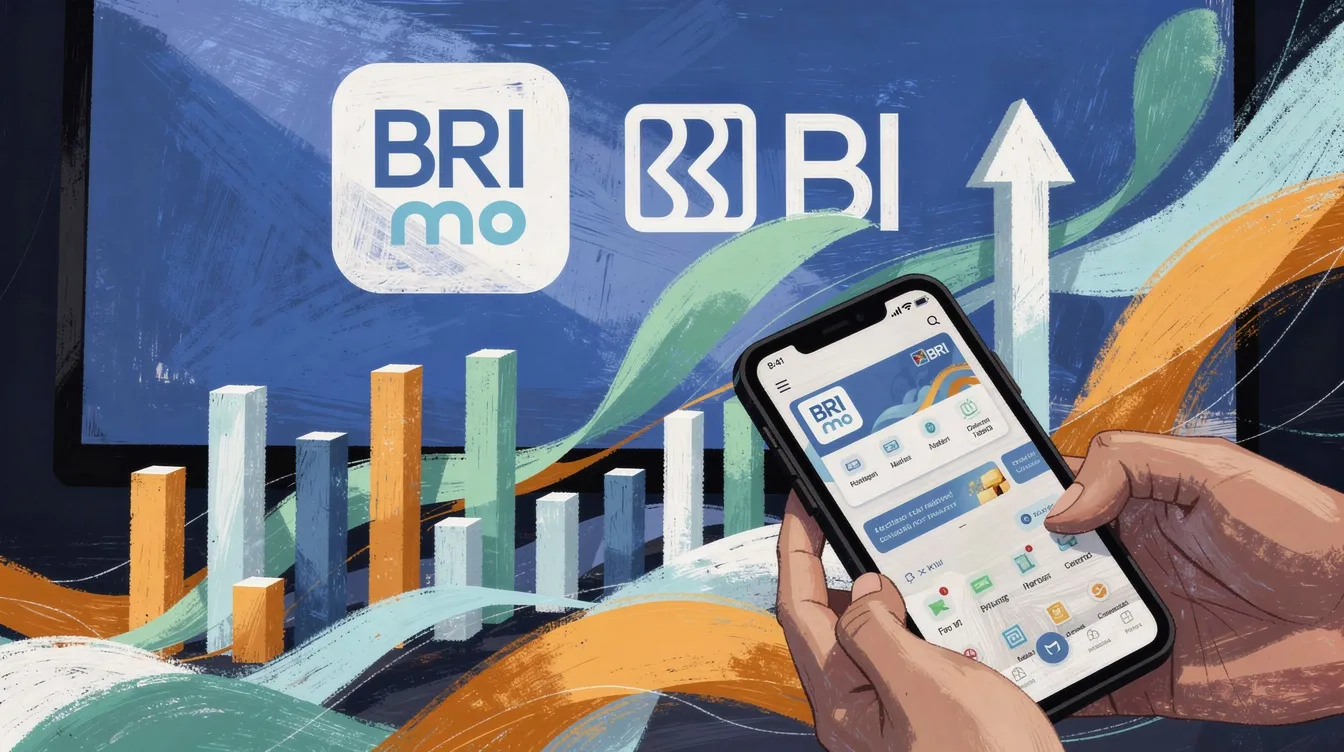
PT Bank Rakyat Indonesia (Persero) Tbk, commonly known as BRI, has announced that it successfully gathered third-party funds (Dana Pihak Ketiga or DPK) amounting to Rp1,580.7 trillion by the end of the second quarter of 2026. This figure represents a 6.7% increase compared to Rp1,482.1 trillion during the same period last year, according to reports from both CNBC Indonesia and Katadata.
The bank's low-cost funding ratio, known as Current Account Savings Account (CASA), also saw an improvement, rising from 65.5% to 67.6%. This shift indicates a stronger reliance on cheaper funding sources within BRI's financial structure. Aquarius Rudianto, BRI's Director of Network and Retail Funding, emphasized that the bank is committed to expanding its services to meet the diverse transaction needs of its customers.
“One of our main focuses in BRI's transformation is to strengthen our funding franchise, especially low-cost funds or CASA.”Aquarius Rudianto, Director of Network and Retail Funding, BRI
During a press conference on August 31, 2026, Rudianto highlighted that BRI's transformation strategy focuses on enhancing its funding franchise, particularly through low-cost funds. He stated that one of the main focuses in BRI's transformation is to strengthen its funding franchise, especially low-cost funds or CASA. The strategy aims to enhance transactions and make BRI increasingly relevant in its customers' daily financial activities.
As of the end of the second quarter, BRI reported 22.3 million active users of its mobile banking application, BRImo, which facilitated 3.3 billion financial transactions totaling Rp4,166 trillion. This activity has begun contributing to BRI's funding and revenue streams. Furthermore, the BRILink agent network saw a 28.6% increase in CASA, reaching Rp30.7 trillion, while fee income was approximately Rp915.7 billion.
“Digitalization is not just about the number of users or transactions; the ultimate goal is to transform transactions into relationships.”Aquarius Rudianto, Director of Network and Retail Funding, BRI
BRI has also expanded its services to the Indonesian diaspora, launching BRImo Taiwan on August 23, 2026. Since its soft launch on March 22, 2026, the service has attracted over 1,460 users, providing 24/7 mobile banking capabilities, including money transfers to Indonesia, local transfers, QR payments, and foreign currency exchange.
Looking ahead, Rudianto stated that BRI plans to further integrate its digital services, including BRImo, merchant services, QRIS, BRILink agents, payroll, and transaction banking, to solidify its position as the primary transaction bank for all customer segments. He remarked that digitalization is not just about the number of users or transactions; the ultimate goal is to transform transactions into relationships, relationships into CASA, and CASA into a more sustainable growth source for BRI.
“Entering the second half of 2026, we will continue to maintain liquidity discipline, particularly by aligning credit growth with our fundraising capacity.”Hery Gunardi, President Director, BRI
Hery Gunardi, BRI's President Director, noted that maintaining liquidity remains a priority as the bank approaches the second half of 2026. Despite the industry's loan-to-deposit ratio (LDR) averaging 88.3%, BRI's LDR stands at 90.8%, indicating a robust liquidity position. Gunardi emphasized the importance of aligning credit growth with the capacity to raise funds, stating that entering the second half of 2026, BRI will continue to maintain liquidity discipline, particularly by aligning credit growth with its fundraising capacity.
Overall, BRI's strategic focus on digitalization and service expansion appears to be yielding positive results.