Brunei
Thailand's Enserv to Launch Sorghum Cultivation in Brunei
Enserv Holding's initiative aims to establish a versatile sorghum industry, enhancing Brunei's food and energy sectors.
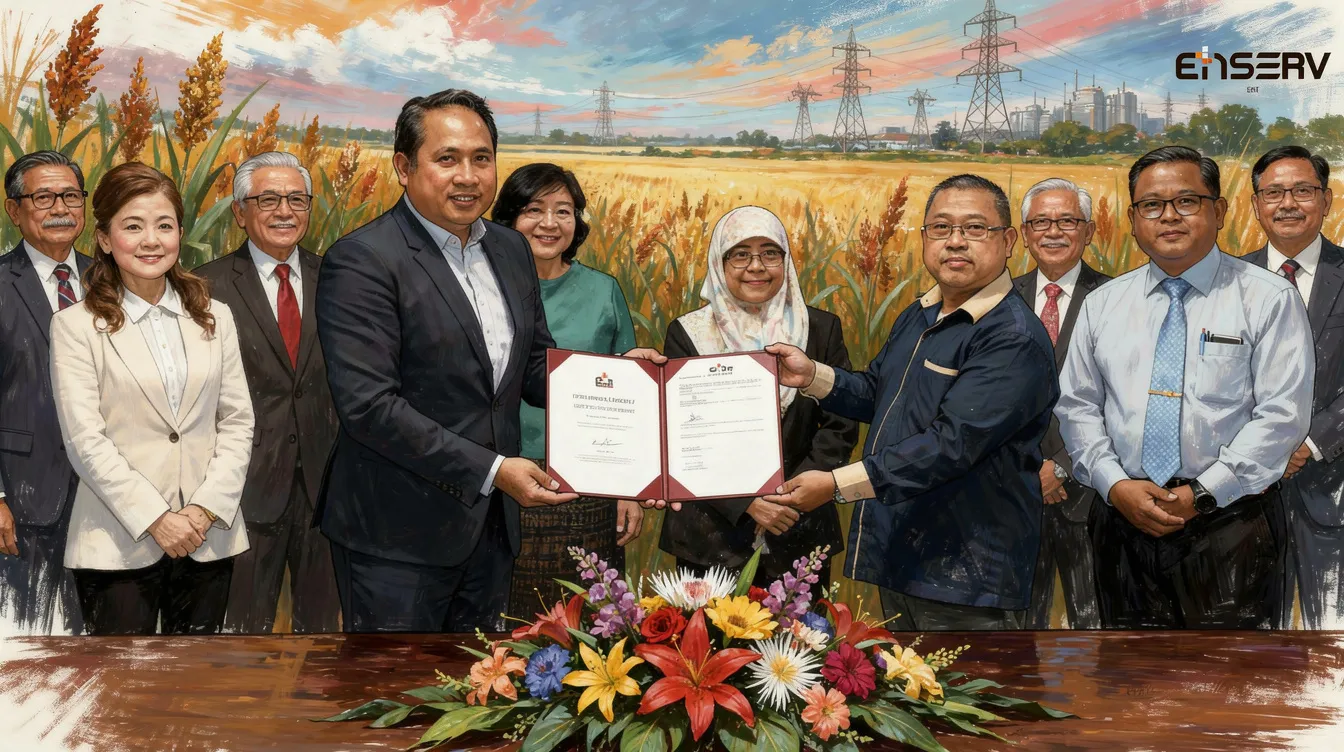
Thailand’s Enserv Holding is preparing to launch Brunei’s inaugural sorghum cultivation and processing project by the end of this year. This initiative, executed through its local subsidiary Enserv BN, aims to leverage the crop's versatility for applications in food, health, and renewable energy.
On September 4, Enserv signed a tenancy agreement with Brunei's Department of Agriculture and Agrifood (DOAA) to establish a sorghum nursery at the Bio Innovation Corridor in Rimba, along with cultivation plans at the nearby Agricultural Development Area (KKP) in Tungku. The project will cover a total of three hectares and will include processing facilities for flour and biomass.
The initial phase of the project will serve as a sandbox to assess the commercial viability of Enserv’s EMF3 platform, which positions sorghum as a “super crop” with potential applications ranging from food production to renewable fuels. If the initial tests prove successful, the project is expected to transition into commercial-scale production.
“This is why we call EMF3 a ‘breakthrough life ecology,’ because it combines natural ecosystems with new technologies to address food, energy, climate, and health security, while also promoting economic growth.”Tanachat Pochana, Chairman of Enserv
According to Enserv Chairman Tanachat Pochana, the gluten-free sorghum grain is rich in micronutrients and will be processed into resistant starch flour, marketed as EMF Rice—a low-calorie carbohydrate alternative aimed at diabetics and those managing their weight. Additionally, the stalks will be converted into solid biofuels, including biocrude oil and biocoal, while the sweet sap can be fermented into bioethanol, with applications in biobased energy storage. By-products from these processes, such as bran and distillers’ dried grains, are also intended for use as animal feed.
Pochana highlighted the environmental benefits of sorghum, noting it requires ten times less water than rice and can sequester up to 20 tonnes of carbon dioxide per hectare per crop cycle, making it a more climate-friendly option. “This is why we call EMF3 a ‘breakthrough life ecology,’ because it combines natural ecosystems with new technologies to address food, energy, climate, and health security, while also promoting economic growth,” he said.
Enserv’s background in renewable energy, exemplified by a 257.8 MW Solar Utility Power Purchase Agreement (PPA) awarded in Thailand in 2015, has informed its agricultural ventures, driven by ongoing research and development. Pochana was introduced to Brunei through Francis Wong, a Brunei-born businessman based in Australia, during the Australia-ASEAN Business Forum, where Wong currently serves as chair.
Despite its smaller size, Pochana noted that Brunei’s efforts to attract foreign direct investment (FDI), supported by government agencies and the Brunei Economic Development Board, present a promising opportunity. His first visit revealed Brunei's relatively untapped market and its ambition to become a halal food hub, which ultimately influenced his decision to establish operations in the country.
“We are committed to seeing Enserv become a shining example, paving the way for more Thai investors to follow in their footsteps.”Her Excellency Boosara Kanchanalai, Thai Ambassador to Brunei
Thailand’s Ambassador to Brunei, Her Excellency Boosara Kanchanalai, expressed her support for the initiative, encouraging more Thai businesses to participate in Brunei’s FDI push to bolster economic diversification. She emphasized that while Thailand is known for its agricultural exports, the national strategy is evolving to focus on building value chains that prioritize “high-quality, safe, diverse, and nutritious food.”
“We are committed to seeing Enserv become a shining example, paving the way for more Thai investors to follow in their footsteps,” Kanchanalai stated during the signing ceremony. She added, “This project demonstrates how a single investment can serve multiple national priorities — food, health, and clean energy. It is also a platform for the transfer of knowledge and technology from our Thai professionals to Bruneian counterparts.”
Food production is one of Brunei’s five priority sectors for economic diversification, with a strategy aimed at developing export-oriented value chains centered around sustainable, high-value commodities. Foreign direct investments have played a crucial role in this effort, contributing to the production of various commodities, including spirulina, blue shrimp, barramundi, and muskmelon.