Vietnam
VinaCapital's Insights on Vietnam's Stock Market: A Long-Term Investment Destination
As Vietnam's stock market transitions to a secondary emerging market status, VinaCapital highlights the importance of sustainable growth and long-term capital flows.
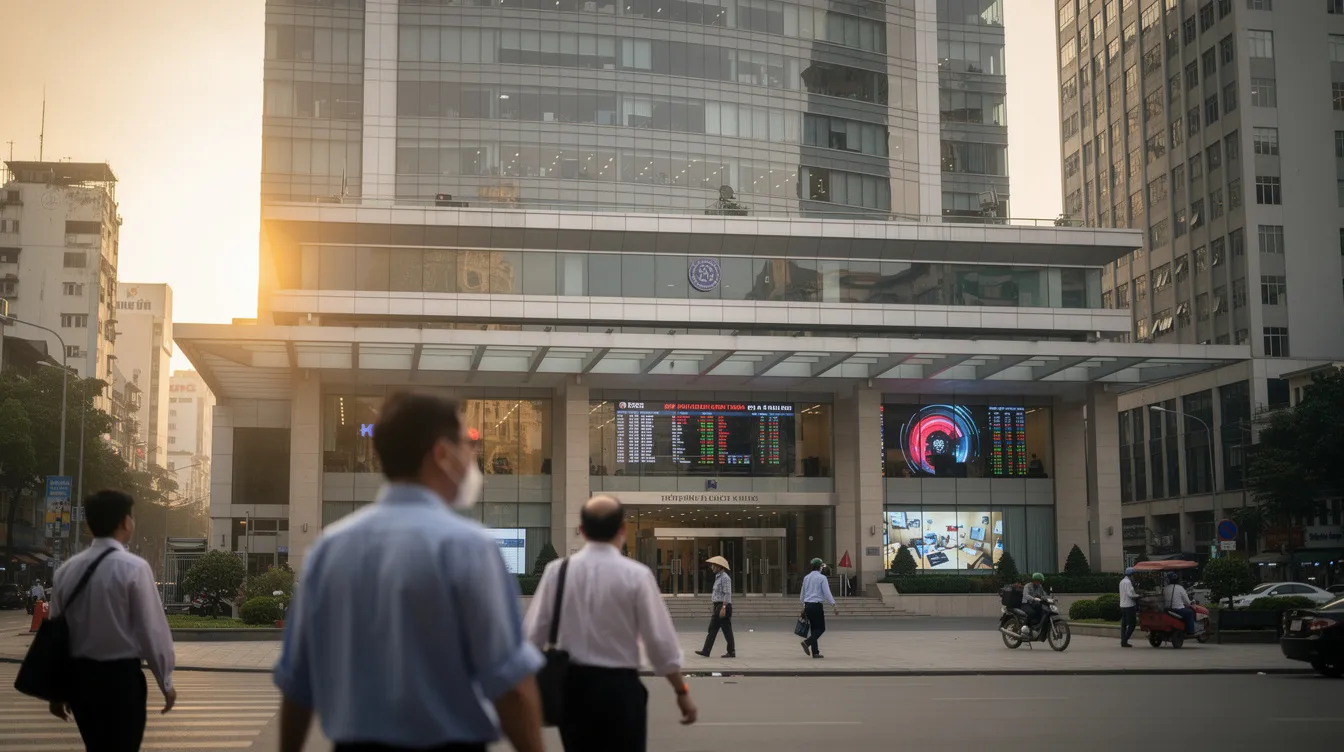
According to Nguyễn Hoài Thu, Deputy General Director of VinaCapital, Vietnam's stock market has grown significantly over the past three decades, though there remains substantial potential for further development.
By the end of October 2026, Vietnam had more than 14.3 million stock accounts, approximately 8.5 times the number at the end of 2016, indicating increased public participation in financial markets. Thu noted that sustainable stock market development depends on long-term capital flows rather than speculative trading.
VinaCapital's analysis shows that the market capitalization has reached nearly 10 million billion VND. However, short-term trading continues to have a strong influence on market developments, and institutional investors have yet to play a proportionate role.
“A sustainable stock market must be based on long-term capital flows rather than speculative trading.”Nguyễn Hoài Thu, Deputy General Director of VinaCapital
Reflecting on the 2006–2009 period, Thu pointed out that the VN-Index fell from around 1,200 points in 2007 to about 250 points in 2009 amid the global financial crisis. She emphasized the importance of strong governance and risk control, noting that during market booms, investors can be swept up in crowd mentality and overlook fundamental factors.
The stock market still faces challenges, including governance quality and capital concentration in financial and real estate sectors, while sectors like technology, healthcare, and energy remain underrepresented. According to the ASEAN Corporate Governance Scorecard in 2024, the average corporate governance score for listed companies in Vietnam was 60.2 out of 130, the lowest among six ASEAN countries evaluated.
To attract more long-term investment, VinaCapital recommends improving capital market infrastructure and streamlining the IPO process. The IPO market experienced fluctuations, with total IPO value reaching about $2.6 billion in 2018 but declining sharply afterward. The market began to recover in 2025, with significant IPOs in sectors such as consumer goods and infrastructure.
“We need not just more IPOs, but quality IPOs that are attractively priced for investors.”Nguyễn Hoài Thu, Deputy General Director of VinaCapital
Thu stated that increasing the number of IPOs is important, but the quality and attractive pricing of these offerings are crucial for investors. This aligns with the broader goal of creating a balanced financial structure where the capital market shares the burden of funding long-term projects alongside the banking system.
Following Vietnam's upgrade to secondary emerging market status by FTSE Russell, Thu remarked that while the upgrade opens opportunities, the quality of the market will determine the extent of capital inflows.
VinaCapital envisions a future stock market with greater diversity and professionalism, featuring a stronger presence of institutional investors and a wider range of investment products, aiming to establish Vietnam as a long-term investment destination in Asia.