Vietnam
Ho Chi Minh City Accelerates AI Integration in Healthcare and Beyond
Local businesses leverage AI technology to enhance operational efficiency and improve healthcare services, while the city plans to educate its citizens on AI applications.
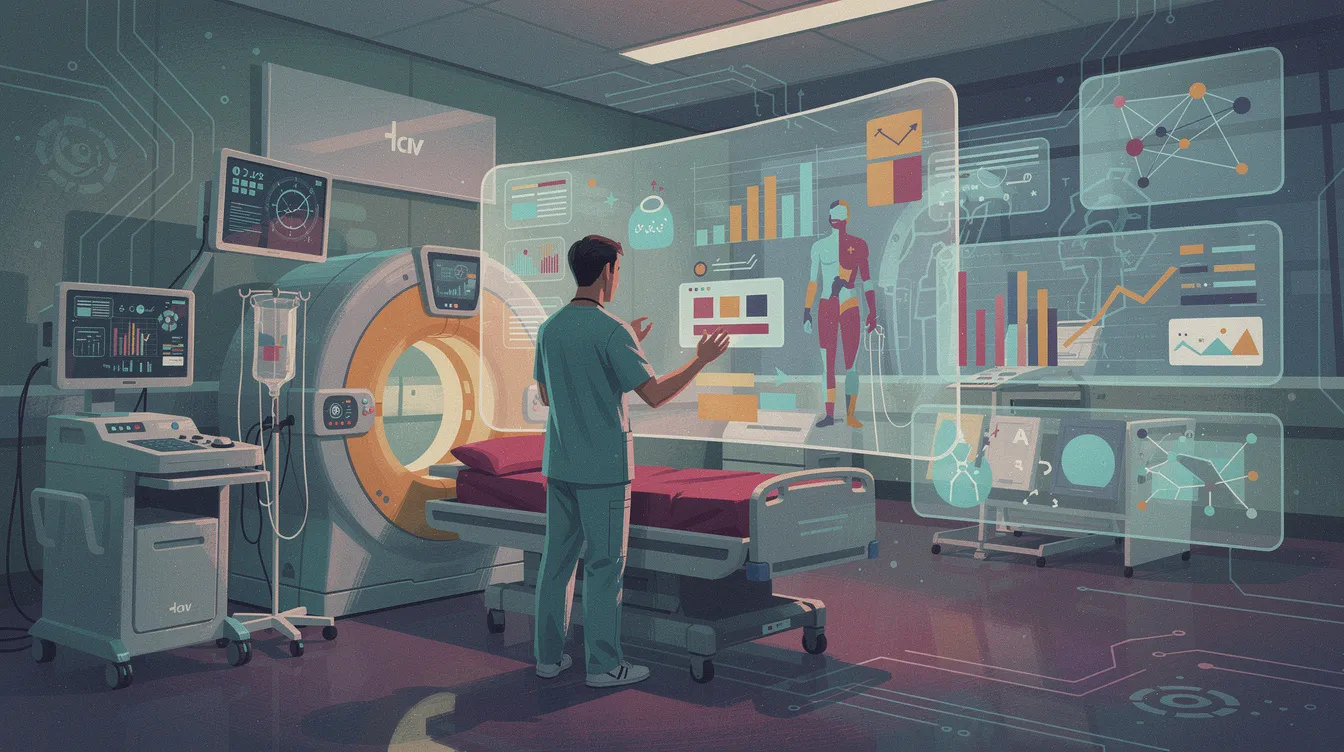
Ho Chi Minh City (HCMC) is integrating artificial intelligence (AI) across various sectors, particularly in healthcare. Local companies are adopting AI technologies to streamline operations and improve service delivery.
According to a report by Tuoi Tre, businesses in HCMC are utilizing AI to enhance efficiency in production processes and improve patient care in hospitals. For instance, AI applications are being used to analyze patient data, predict health outcomes, and optimize resource allocation in medical facilities.
In tandem with these developments, the HCMC government has launched an initiative called “AI for Citizens,” which aims to educate the public on AI technologies and their applications. This program, set to run from 2025 to 2030, targets a broad demographic, including civil servants, workers, and students. The goal is to train at least 1% of the city's population in AI knowledge annually during 2026-2027, then at least 5% annually during 2028-2030, reaching a total of 15% of the population by 2030, which amounts to approximately 2 million people.
The city plans to implement a series of short-term training sessions and develop an online learning platform tailored for various user groups, including older adults and those less familiar with technology. The curriculum will focus on practical applications of AI without requiring complex programming skills, emphasizing ethical considerations and safety in AI usage.
“Vietnam is entering an important phase in the AI era. We see a strong momentum among businesses, the developer community, the education sector, and the public sector in exploring how AI can drive productivity, innovation, and competitiveness.”Dhanawat Suthumpun, Managing Director, Microsoft's Emerging Markets
As reported by Vietnam Investment Review, Vietnam's overall AI adoption rate has increased from 21.2% in the first half of 2025 to 26.5% in the first quarter of 2026. This positions Vietnam as one of the fastest-growing economies in AI adoption in Southeast Asia, trailing only Singapore.
While Vietnam focuses on integrating AI into its healthcare system and enhancing workforce skills, the Philippines faces a different challenge regarding the impact of AI on its new generation of workers. A report by the Manila Times highlights that many recent graduates have relied heavily on AI tools like ChatGPT throughout their education, raising concerns about their preparedness for the workforce. About 83% of Filipino students have reportedly used generative AI for academic purposes, with a significant portion relying on it for writing and summarizing tasks.
Philippine media emphasizes the dual-edged nature of this reliance on AI. While it could enhance productivity, there are worries about graduates lacking the foundational skills necessary for critical thinking and problem-solving. A study cited in the Manila Times found that students who depended on AI for learning exhibited lower knowledge retention compared to those who engaged in traditional study methods. This suggests that while AI can facilitate quick outputs, it may hinder deeper understanding.
In contrast, Vietnamese coverage stresses the proactive measures being taken to educate citizens about AI, positioning it as a tool for empowerment and innovation. The emphasis is on harnessing AI to improve healthcare and overall productivity, while the Philippines is grappling with the implications of a workforce increasingly dependent on AI for basic tasks.
Dhanawat Suthumpun noted that Vietnam is entering a pivotal phase in the AI era, with significant momentum across sectors. This collective effort reflects HCMC's commitment to harnessing AI and preparing its workforce for a future increasingly defined by digital technologies. Meanwhile, the Philippines must navigate the complexities of integrating AI into its educational and employment landscapes, ensuring that the next generation of workers can leverage AI effectively without losing essential skills.