Singapore
Seatrium Transfers First Energy from Floating Lab to Singapore's Grid
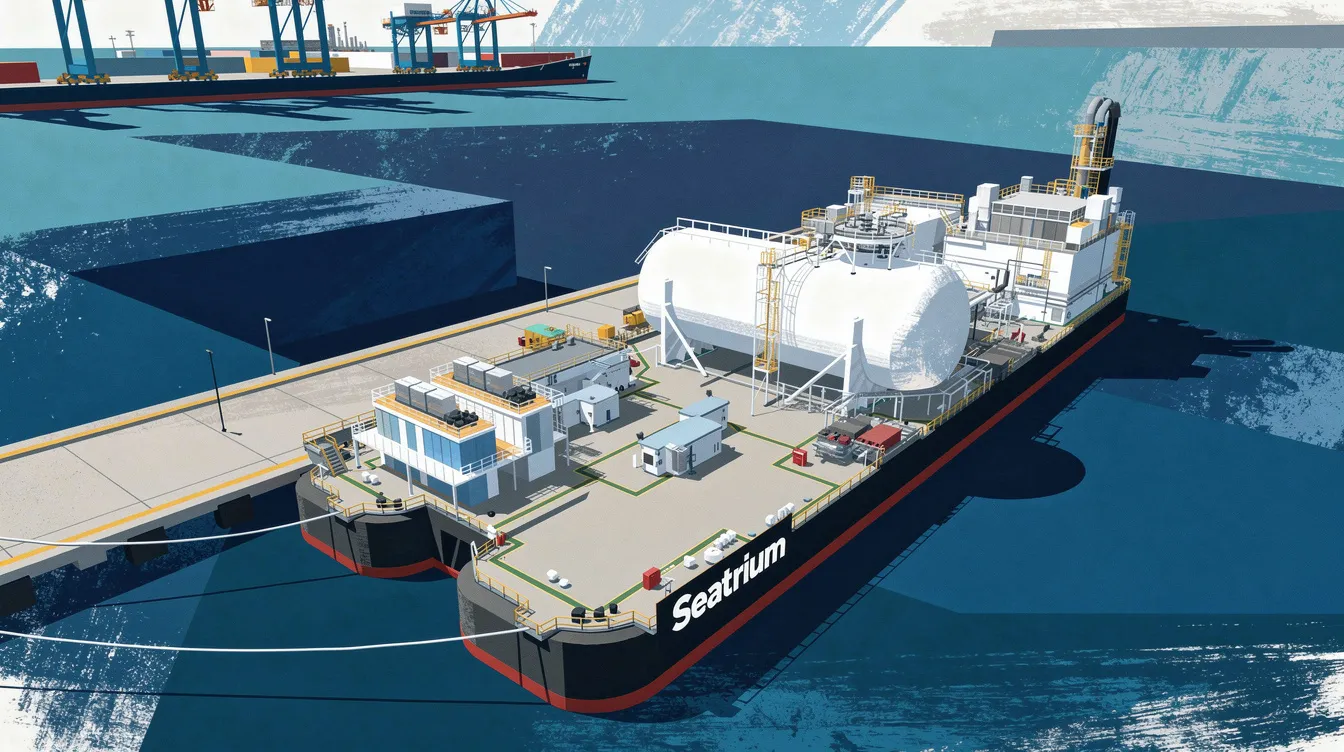
Singapore's energy landscape is evolving with the successful transfer of its first electron from Seatrium's floating living lab to the national electricity grid. This pioneering initiative is part of Singapore's broader strategy to enhance energy security through innovative solutions.
Seatrium, a company specializing in offshore, marine, and energy services, achieved this milestone with its floating lab, the world's first remote-controlled platform designed for energy distribution. The lab is located off the company’s yard in Pioneer and operates under a partnership with the Energy Market Authority, established in 2020. The floating lab was constructed in 2025 and is monitored from a remote operations center situated approximately 1 kilometer away, reducing the need for on-site manpower.
“The first electron transfer validates that Seatrium has successfully developed a floating distributed energy resource platform that can support both on-land grid and marine energy needs.”Lee Wey Lii, Senior Vice-President, Seatrium Digital
Minister-in-charge of Energy and Science and Technology, Tan See Leng, attended the event and emphasized the significance of this achievement, stating that it demonstrates the capability of a marine-class floating platform to meet stringent regulatory and technical standards necessary for grid connection. Lee Wey Lii, Seatrium Digital's senior vice-president, remarked that the first electron transfer validates that Seatrium has successfully developed a floating distributed energy resource platform that can support both on-land grid and marine energy needs.
The floating lab operates by transferring liquefied natural gas (LNG) from vessel to vessel until it reaches the platform, where it is converted into electricity via gas engines. Although LNG is not classified as a renewable energy source, it is considered a cleaner alternative to other fossil fuels due to its lower carbon dioxide emissions. The electricity generated from the floating lab powers Seatrium's operations at the Pioneer yard, with excess energy exported to the Singapore power grid. This surplus is estimated to meet the monthly energy needs of approximately 1,500 four-room HDB households.
Seatrium's floating lab integrates a stacked battery energy storage system with gas bunkering infrastructure, positioning the company at the forefront of offshore energy solutions as demand grows in major consumer markets. Lee noted that while the current energy generation relies primarily on LNG, the platform can also facilitate the testing and scaling of solutions utilizing a broader mix of lower-carbon energy sources in the future.
“For Singapore, the platform demonstrates a more flexible approach to electrification and energy resilience while creating the potential for distributed power solutions that can serve both grid and marine users.”Lee Wey Lii, Senior Vice-President, Seatrium Digital
Energy resilience has become increasingly critical, particularly following geopolitical tensions impacting energy supply routes. The floating lab exemplifies a more flexible approach to electrification and energy resilience, with potential applications for distributed power solutions that serve both grid and marine users. Lee stated that for Singapore, the platform demonstrates a more flexible approach to electrification and energy resilience while creating the potential for distributed power solutions that can serve both grid and marine users.
As Singapore continues to navigate its energy transition, initiatives like the floating lab highlight the potential for local companies to develop and export advanced energy infrastructure and digital energy solutions to regional and global markets. The lab's current pilot phase is expected to pave the way for larger-scale implementations that may incorporate more sustainable energy sources.