Philippines
Philippines Rejects Trump’s Claim of 100% US Energy and Farm Imports
Manila says no terms have been agreed, while officials and business groups point to price, supply and food-security concerns in any negotiations.
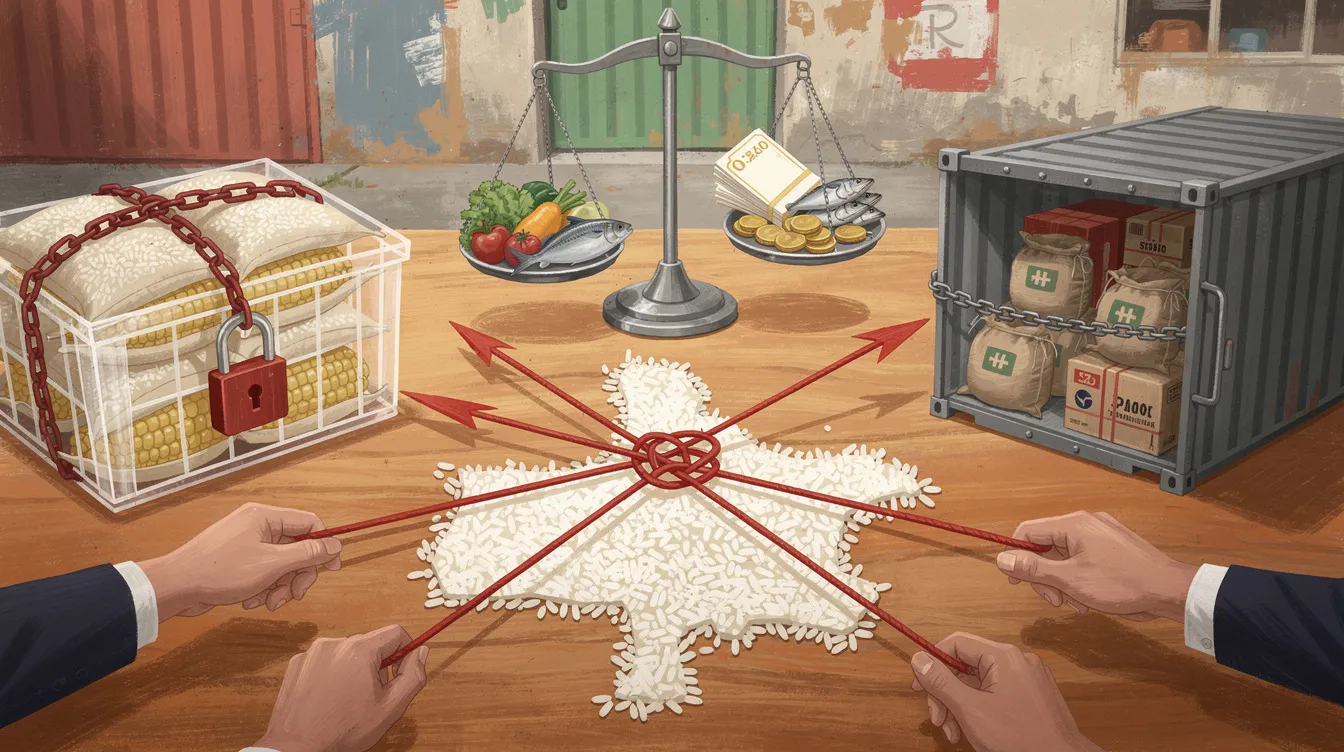
Philippine officials say no agreement has been finalized to buy all the country’s energy and agricultural imports from the United States, contradicting US President Donald Trump’s claim about such an arrangement. The terms of a proposed trade discussion remain under consideration in Manila, where officials say price, availability and the interests of local producers will shape any decision.
Trump said after his Asian trip that Philippine President Ferdinand Marcos Jr. had agreed to source 100% of the country’s energy and agricultural requirements from the US. He also invoked the Philippines’ tensions with China, questioning whether Brazil would help Manila in a conflict. The White House’s November 18 fact sheet described a commitment to increase Philippine imports of US energy and farm products as part of an effort to reduce the US trade deficit; it did not specify exclusive sourcing or a 100% target.
At a Palace briefing, Press Officer Clarissa Castro said there were no specific terms yet and that discussions had focused on accelerating work on possible transactions. She said the government would consider the price and competitiveness of US goods and would not enter an arrangement harmful to Philippine consumers or domestic producers, according to BusinessWorld.
Officials say negotiations remain open
Trade Secretary Cris Roque said the discussions were continuing and that she could not disclose details because negotiators had signed a non-disclosure agreement, Rappler reported. She also noted that private companies, rather than the government, make most international purchases, limiting Manila’s ability to direct all energy buying to one country.
Energy Secretary Sharon Garin similarly said the government could not compel Philippine fuel companies to buy from a particular source. Direct government purchases might be possible for stockpiling, she said, but there was no written document setting out an arrangement, according to Rappler.
“Francisco Tiu-Laurel said the Philippines needs multiple sources to be food secure.”Francisco Tiu-Laurel, Agriculture Secretary
On agriculture, Secretary Francisco Tiu-Laurel said additional US supplies could be considered if prices were competitive, particularly for products such as soybeans and wheat that the Philippines does not grow in sufficient quantities. But he also said food security requires multiple sources of supply. BusinessWorld reported that Senator Erwin Tulfo said officials had been surprised by Trump’s 100% claim and that earlier preparations for the leaders’ meeting had focused on tariffs, not an all-imports sourcing commitment.
Ambassador to the US Jose Romualdez said any commitments would depend on further discussion of costs and how the proposal could be implemented. He characterized the negotiations as a reciprocal arrangement, Rappler reported. The Department of Foreign Affairs told the Senate that the trade and agriculture departments had been assigned to handle the discussions, while it continued to monitor them, according to BusinessWorld.
Supply choices and domestic interests
For the Philippines, the question is whether additional purchases from the US can compete with existing suppliers and fit the country’s supply needs. Palace officials have said price and availability will be considered; Tiu-Laurel’s comments, as reported by Rappler, also put food security at the centre of the debate. No timeline for negotiations had been set, BusinessWorld reported.
The Management Association of the Philippines has called for greater transparency and warned against overdependence on a single supplier, according to BusinessWorld. It sought clarification on possible effects for domestic industries and Philippine exporters. Separately, lawmakers from the Makabayan bloc filed a House resolution seeking a congressional investigation into the proposed arrangements and disclosure of their terms, citing potential consequences for farmers, food security and energy supply.
The White House’s November 18 fact sheet described increased Philippine purchases of American energy and agricultural goods as a way to address the US trade deficit. Philippine officials, meanwhile, have said no specific terms have been agreed and that any purchases must be assessed against cost, supply and domestic interests. The two governments are expected to hold a bilateral meeting in early 2027, with security issues also on the agenda, BusinessWorld reported.