Philippines
Philippines Faces Challenges with Aging Copper Cable Infrastructure
As the country seeks to modernize its telecommunications, a recent incident highlights the ongoing issues with copper cable theft and infrastructure decay.
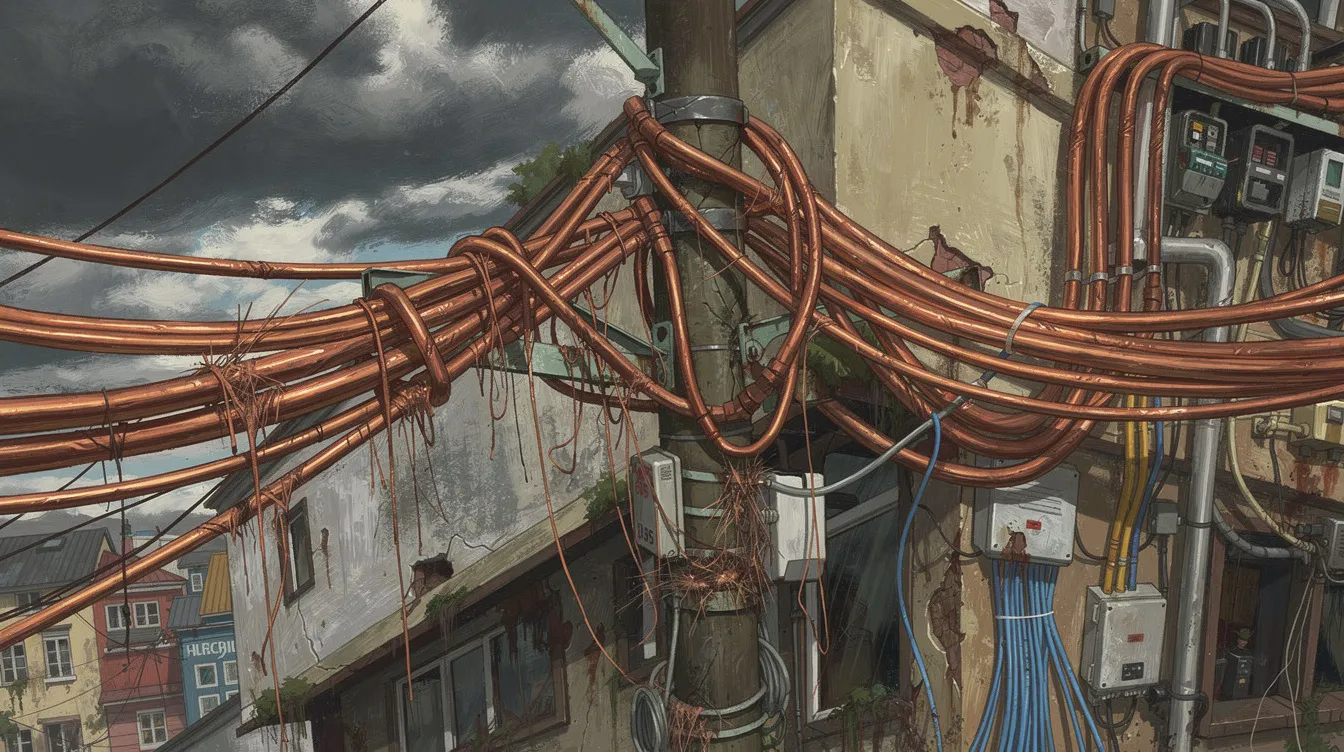
In the Philippines, the sight of tangled copper cables hanging from utility poles has become a familiar yet problematic aspect of urban landscapes. This aging infrastructure, much of which is no longer functional, has contributed to persistent issues in the telecommunications sector. Policymakers are beginning to address these challenges, with cleanup drives and underground cabling ordinances initiated in major cities like Metro Manila and Cebu City. Additionally, the Konektadong Pinoy Act aims to enhance internet access by fostering competition in the data transmission market.
However, the underlying problem remains: the country’s reliance on a copper voice network that has suffered from chronic underinvestment. According to a report by the Manila Times, the quality of landline service is poor, and the costs of domestic calls between landlines and mobile phones can reach between P6.50 to P7.50 (approximately $0.12 to $0.14) per minute. As a result, many users have abandoned landlines in favor of mobile phones, which offer free calls between mobile numbers. This shift has left the copper network underutilized and in disrepair, leading to safety hazards such as fires from overloaded cables and injuries from sagging lines.
“The economic case for maintaining the old network evaporates and, with it, the justification for leaving those cables strung from pole to pole.”Martin Nygate, CEO of Velox Networks
In a recent incident, authorities arrested 17 individuals for allegedly stealing a 150-meter copper cable valued at more than P500 million. The suspects, who claimed they were unaware of the nature of their cargo, were caught loading the cable into a van. This theft resulted in approximately 1,400 subscribers losing their internet connection, highlighting the vulnerabilities of the existing infrastructure and the desperate measures some individuals may resort to amid its decay.
“It is possible they did not know what they were carrying. They said there was only one person who recruited them.”Police Major Bobbe Imbo, Las Piñas Police
Experts argue that the Philippines does not need to continue investing in outdated copper infrastructure. The transition to cloud-based communication, particularly through Voice over Internet Protocol (VoIP), offers a more efficient and cost-effective alternative. With existing data networks improving rapidly, businesses can migrate to cloud platforms with minimal disruption, enhancing their communication capabilities while reducing costs. Martin Nygate, CEO of Velox Networks, noted that the necessary infrastructure for this transition is already in place, allowing businesses to leapfrog traditional telephony systems.
Despite these advancements, the transition will require careful coordination among telecommunications carriers, local governments, and regulators. As cloud adoption accelerates, the economic case for maintaining the old copper network weakens. The Philippines has long grappled with its cable issues, and the recent theft incident serves as a stark reminder of the urgent need for modernization.