The Explainer · Economics
The Open Door
What foreign money did to Southeast Asia — the upside, the catch, the surprising side effects, and when shutting the door is actually the smart move.
scroll ↓
The voice of the ASEAN people
INSIDE·ASEANConnecting ASEAN with the World
What foreign money did to Southeast Asia — the upside, the catch, the surprising side effects, and when shutting the door is actually the smart move.
In 2008 Samsung opened a phone factory in Bắc Ninh province, north of Hanoi. It did not just build phones. It rewired an economy.
At its 2021 peak, Samsung's Vietnamese operations shipped close to a fifth of everything Vietnam exports — around 13% even now, as the rest of the economy caught up, with the company's revenue alone worth about 13% of Vietnam's entire GDP. Cumulative Samsung investment in the country has passed US$23 billion. A nation that in 1990 ranked among the world's lowest-income economies had become the assembly floor for much of the world's smartphone supply — not by inventing the phone, but by opening the door to the foreigners who did.
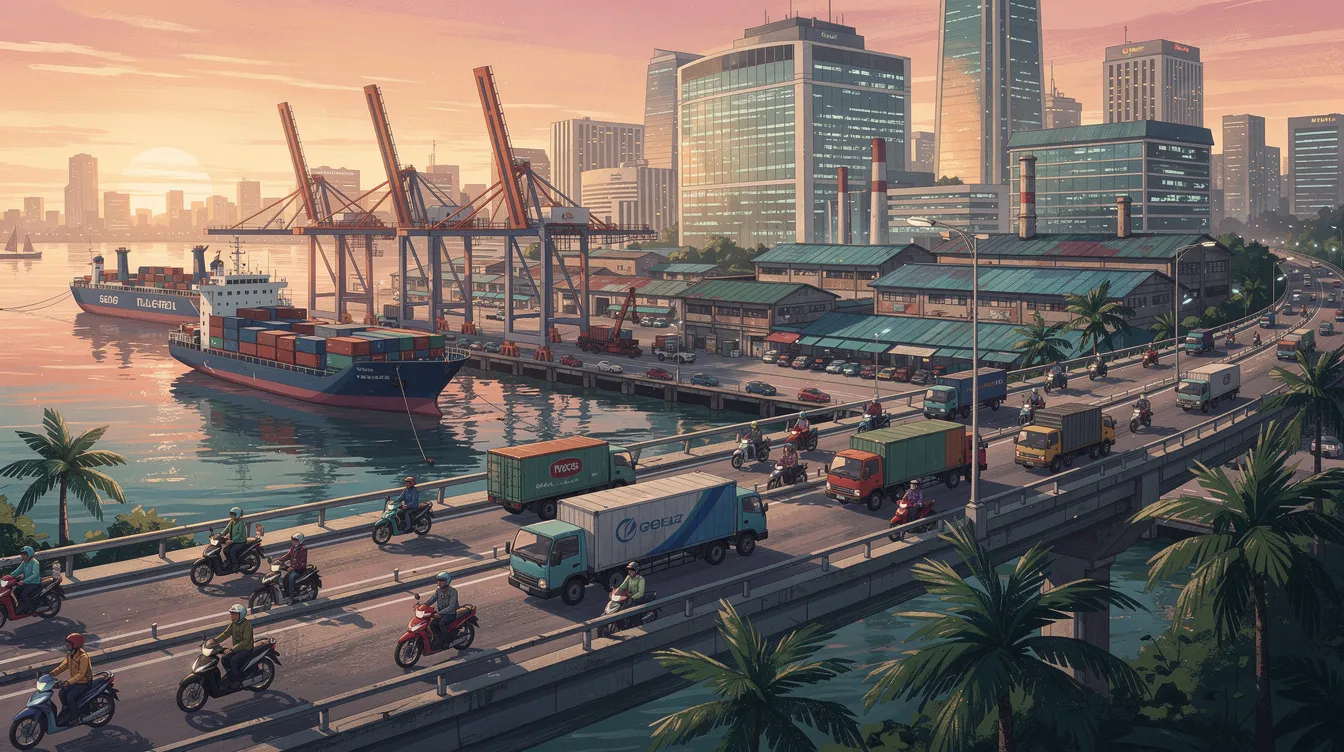
That is foreign direct investment, or FDI: not the hot money that races in and out of stock markets, but a foreign company sinking real capital into real factories, ports, and payrolls — and staying. Southeast Asia has spent forty years running one of the largest open-door experiments in economic history.
Yet that door has never swung freely. Foreigners make a convenient scapegoat: they cannot vote, they are a visible minority, and it is a short step from there to a stump speech about outsiders and their companies taking jobs and opportunities from local firms. So most ASEAN governments keep parts of their economies fenced off — negative investment lists that bar or cap foreign ownership in businesses judged too small, too strategic or too sensitive to hand over. In Indonesia, whether a foreigner may own a company at all, and how much of it, is still decided line by line against a national register of thousands of business-activity codes, the KBLI.
This is what the evidence says the open door — and the locks kept on it — actually did.
In 2000 the whole of ASEAN drew roughly US$22 billion of foreign direct investment a year.
Over the next two decades the flow multiplied roughly tenfold, as global supply chains threaded through the region.
By 2023 ASEAN pulled in a record ~US$230 billion — about 17% of all the FDI on earth, and, measured on a like-for-like basis, more than China.
Economists draw a hard line between two kinds of capital that cross borders. Portfolio flows are financial: a fund in London buys Indonesian bonds this morning and can sell them by lunch. Foreign direct investment is physical and sticky: Intel builds a chip-testing plant in Penang, or a Japanese carmaker opens a line outside Bangkok. The investor takes a lasting stake — conventionally 10% or more of a company — and, crucially, tends to bring more than money.
The distinction matters because sticky capital behaves differently in a crisis. Portfolio money fled Asia in 1997–98 and turned a wobble into a catastrophe. Factories cannot flee overnight — which is one reason policymakers court FDI specifically.
Where the money lands
FDI inflows by ASEAN economy, 2023 (US$ billion). Singapore's total is inflated by conduit flows.
The textbook case for FDI is not really about the money. Low-income countries are short of capital, yes — but they are shorter still of the things capital carries with it: technology, management know-how, and a ticket into global markets.
When a multinational arrives, four things can happen. It finances investment a country's own savings couldn't. It transfers technology and process knowledge that would take decades to grow at home. It plugs local suppliers into a global value chain that reaches customers on the other side of the planet. And it tends to pay a wage premium, pulling up local pay and training workers who later leave and spread what they learned.
The prize isn't the factory. It's everything that leaks out of the factory.
That leakage has a name: spillovers. And whether they actually happen is the whole ballgame — which is why economists have spent thirty years arguing about them. Try it yourself.
The spillover machine
How much of a multinational's productivity edge reaches domestic firms depends on two things a country can partly control. Drag the sliders.
Here is the finding that humbled a generation of development economists. In 1999 Brian Aitken and Ann Harrison looked at Venezuelan factories and found that when foreign firms entered an industry, domestic firms in that same industry often got less productive, not more. The multinational poached their best workers and their customers. Call it crowding out. Set against the lift a plant got from its own foreign ownership, the net effect on the wider economy was small — and what gains there were flowed mostly to joint ventures.
Then in 2004 Beata Javorcik looked in a different direction — not sideways at competitors, but down the supply chain at the local firms selling inputs to the multinational. There she found the opposite: real, positive spillovers. The foreign firm wanted reliable local suppliers, so it taught them, financed them, held them to standards. In her data the effect was big — domestic suppliers to foreign firms were on the order of 15% more productive. Call it crowding in.
Both are true at once. FDI can hollow out your competitors and level up your suppliers in the same year. Which effect dominates depends on the linkages — and on whether the foreign operation is woven into the local economy or sealed off from it in an export enclave that imports every screw.
The whole thing turns on conditions the host country controls. In an influential cross-country study, the economist Laura Alfaro and colleagues found that FDI raised growth only where local financial markets were deep enough to bankroll the domestic firms that might seize the spillovers. Where they weren't, the foreign money still came — and the gains didn't.
An export-processing zone with no local suppliers is a very expensive way to rent out your workers.

Beyond the tidy story of capital and technology, opening the door does stranger things to an economy.
Some of the biggest spillovers travel by résumé. A worker trained at the multinational quits, joins a local firm, and takes the know-how with them. The factory's best export is its ex-employees.
Foreign competition can be pro-consumer, dragging down prices and forcing sleepy local monopolies to sharpen up — a gain that never shows in the investment statistics.
The fear is a "pollution haven" — dirty industry fleeing rich-country rules. Sometimes the reverse happens: multinationals import cleaner technology than the local incumbents. Both are real; which wins is local.
Penang's chip industry began in 1972, when Intel built its first plant outside America — $1.6m, a hundred workers, a converted paddy field. Today Malaysia does ~13% of the world's chip assembly and testing, and the local suppliers it seeded — Inari, ViTrox, Pentamaster — are billion-dollar firms.
Export-factory FDI has pulled millions of women into the paid workforce across the region, reshaping households and bargaining power in ways economists are still measuring.
Big investors push for predictable courts, customs and contracts — sometimes dragging governance upward, sometimes just capturing the officials who write the rules.
If FDI is this good, every country wants more of it — and there is where the trouble starts. To lure the foreign factory, governments dangle tax holidays, cheap land, and special-zone exemptions. But when your neighbour offers the same deal, you both cut again. The investment goes where it was likely going anyway; the two of you have simply agreed to collect less tax on it.
The uncomfortable empirical finding is how often these incentives are redundant — the investor would have come anyway. In surveys, the share of firms saying exactly that runs around 85% in Vietnam and 81% in Thailand, and above 90% in some other developing regions. The perk is a subsidy paid by a low-income country's schools and roads to a company that had already made up its mind. In the Philippines alone, investment tax breaks cost the treasury an estimated ₱147 billion in 2024. The new OECD global minimum tax — a 15% floor for the largest multinationals — is partly an attempt to call the race off; Vietnam adopted it in 2024, with Singapore, Malaysia, Indonesia and Thailand following in 2025.
Two countries, one prisoner's dilemma
Watch what happens when each capital keeps undercutting the other's tax rate to win the same factory.

So far the door has swung one way: open it. But there is a serious, centuries-old argument for closing it — temporarily. It is the infant-industry case, and it is not a crank idea: Alexander Hamilton and Friedrich List made it, and every rich country used some version of it on the way up.
The logic: a new domestic industry can't yet compete with established foreign giants, but if it were given room to learn — protected, subsidised, nurtured — it could climb the learning curve and eventually stand on its own. The catch is in the word temporarily. Protection that never ends stops being a school and becomes a subsidy for permanent mediocrity, defended by the very firms it was meant to graduate.
Southeast Asia is running a live test of exactly this bet.
On 1 January 2020, two years ahead of schedule, Indonesia banned exports of raw nickel ore — forcing miners to smelt at home. Jakarta says nickel exports leapt from around $6bn to $30bn as processing moved onshore, though most smelters are Chinese-owned, so how much value Indonesia truly keeps is hotly disputed. The EU challenged the ban at the WTO and won in 2022 — but Indonesia appealed into the WTO's paralysed Appellate Body, so there is still no enforceable ruling. A textbook infant-industry wager, live and unresolved.
From the early 1970s Thailand used local-content rules to force Japanese carmakers to build a real supplier base at home, not just assemble kits. It worked: Thailand became the "Detroit of Asia", building ~1.8 million vehicles in 2023 and exporting over half. The rules were retired around 2000 under WTO commitments — the industry had grown up. The same tools elsewhere produced firms that never did.
What separates the wins from the fiascos isn't whether a country protected an industry — almost all did — but whether protection came with discipline and an exit. The East Asian successes tied support to export performance: sell abroad, where you can't hide from competition, or lose the help. The economist Dani Rodrik put the discipline plainly — the government's job, he wrote, "is not to pick winners, but to know when it has a loser." Support has to arrive as a carrot and a stick; Latin America, he noted, used "too much of the carrot, and too little of the stick." Protection without a sunset is just capture in a nicer suit.
The economics profession is, if anything, warier than the politicians. Reviewing the evidence, Ann Harrison and Andrés Rodríguez-Clare drew a line between "hard" industrial policy — tariffs and subsidies that try to pick winning sectors — and "soft" industrial policy that simply clears coordination problems: training, infrastructure, matchmaking between local suppliers and foreign buyers. They found little robust evidence for picking winners, and far more for the unglamorous soft kind. Rodrik's own recipe leans on what he calls, borrowing from the sociologist Peter Evans, "embedded autonomy" — a state close enough to industry to learn from it, but independent enough to cut it off.
The sweet spot
Temporary protection can pay off; permanent protection doesn't. Move the sunset year and watch the net payoff.
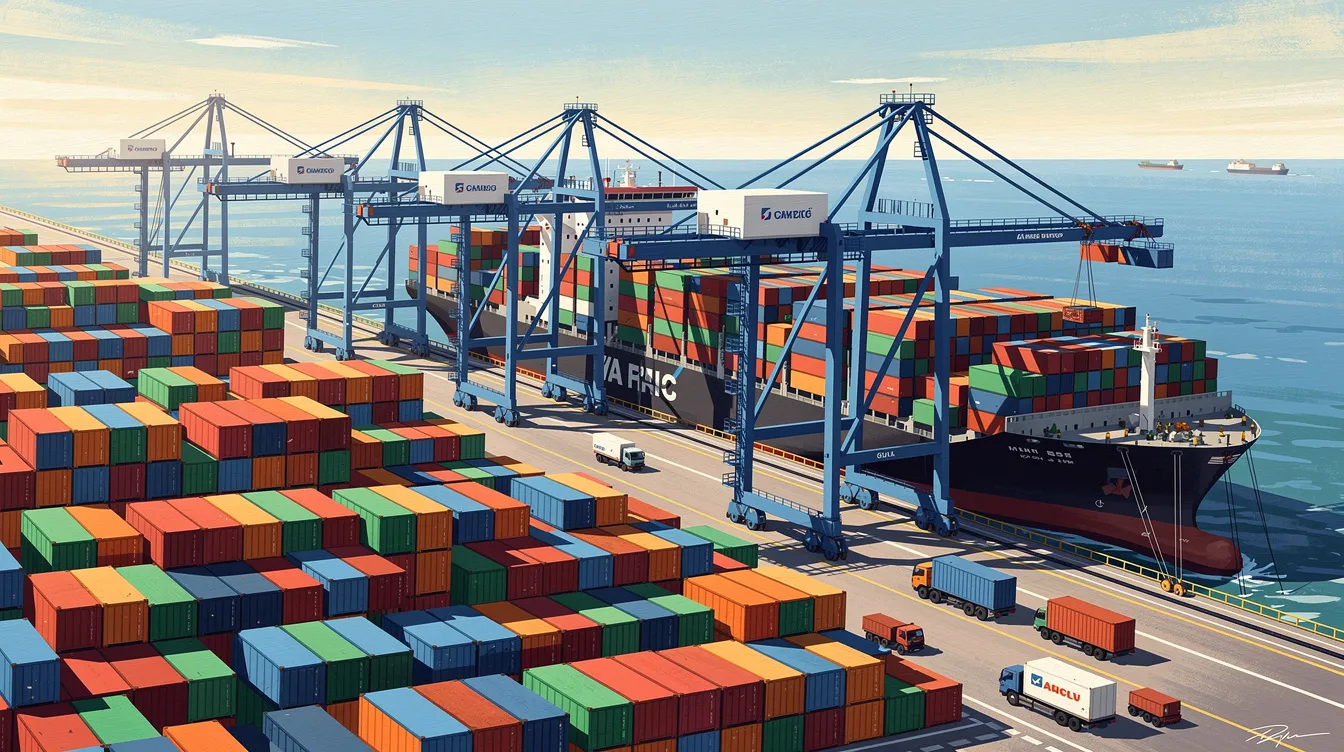
Stan Shih, who founded the computer maker Acer, drew a curve to explain where the money in a global product actually sits. Plot the stages of making something — design, components, assembly, branding, marketing — against how much value each captures, and you get a smile: high at the two ends, low in the middle. The rich rewards go to the designers and the brand-owners. The thin margins go to the assemblers in the middle.
Consider the iPhone. By one careful teardown, Apple captures roughly 58% of the phone's value, while the Chinese factories that actually assemble it keep on the order of $8.46 per handset — a few percent. Repeat that gap across a thousand products and you have the whole story. As the researchers who took the iPhone's value chain apart concluded, "there is simply little value in electronics assembly." That is the difference between capturing prosperity and merely renting out your workers.
For decades ASEAN sat squarely in the middle of the smile — screwing together other people's designs. The whole development question is whether opening the door is a way into that thin-margin middle, or a ladder out of it: from assembling phones to making the chips inside them, from stitching shirts to designing them. Some economies have started the climb. The interactive below is where the argument of this whole piece comes to rest.
Where the value hides
Move along the value chain to see who captures the margin — and where ASEAN is trying to climb to.
Add it all up and the weight of the evidence tilts one way. Over time, and on average, economies that opened themselves to foreign investment grew faster and more productive than those that walled it out. The great East Asian escape from poverty — Singapore, then Malaysia and Thailand, now Vietnam — ran through the open door, not around it.
Openness is the right default. But it is a threshold, not a guarantee.
The gains are conditional. They show up where a country has the schools to absorb the technology, the suppliers to catch the linkages, the competition policy to stop enclaves, and the human capital to climb the value curve. Where those are missing, FDI can leave behind little but a fenced-off export zone and a hole in the tax base.
And protectionism is not always the enemy of development — it was, selectively and temporarily, part of how the winners won. The honest lesson is narrow: protect to build a capability, tie the help to performance, and set a date to end it. Protect to preserve a comfortable incumbent, and you have simply taxed your own future.
So: open the door. Just know that the prize isn't the foreign factory. It's whether your own economy is ready to catch what leaks out of it.
An InsideASEAN explainer. Figures are drawn from the sources above; a few contested points (Singapore's conduit-inflated share, Indonesia's disputed nickel value-capture, Malaysia's 2023 inflow vintage) are flagged in the text.