ASEAN
Indonesia and Malaysia Strengthen Border Trade Cooperation
The two nations have committed to enhancing trade and investment at the Entikong-Tebedu border, focusing on the implementation of the Border Trade Agreement.
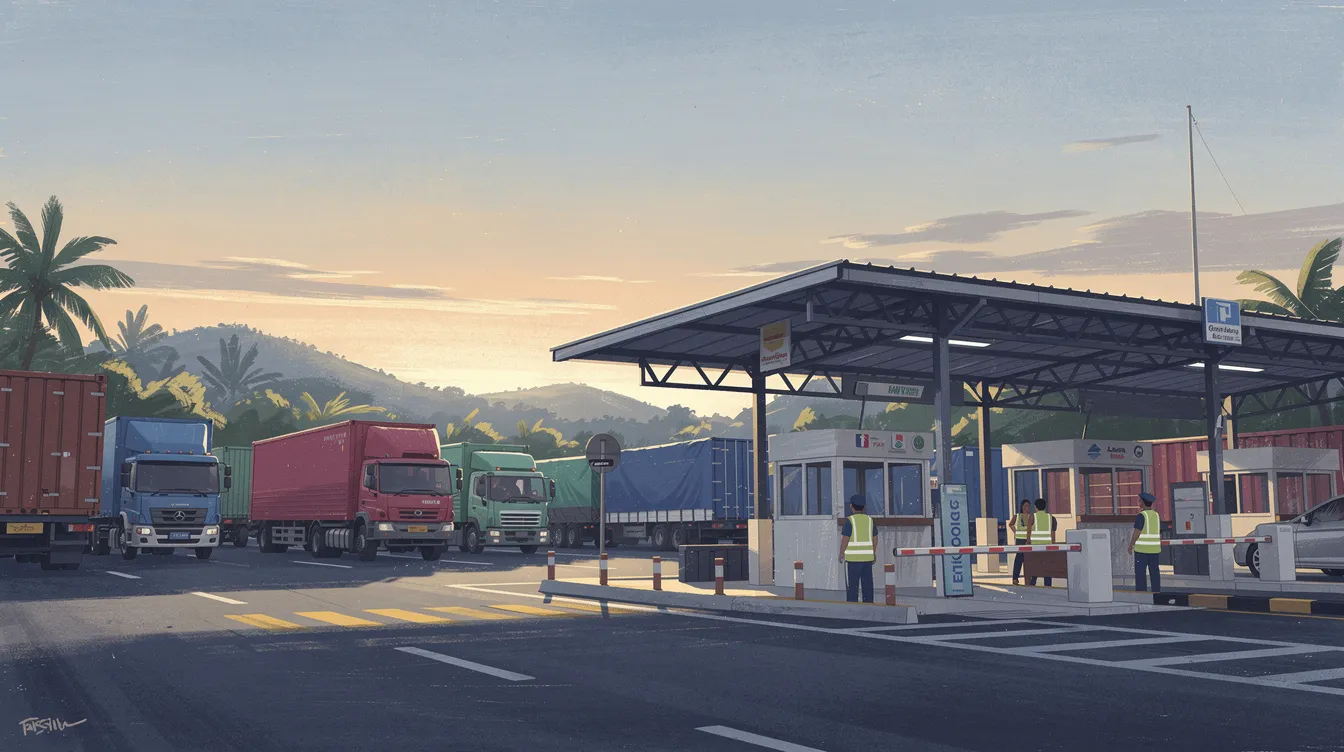
Indonesia and Malaysia are taking significant steps to enhance their economic cooperation, particularly at the Entikong-Tebedu border. During a recent meeting of the Joint Trade and Investment Committee (JTIC) held on September 3, 2026, Indonesian Minister of Trade Budi Santoso and Malaysian Minister of Investment, Trade, and Industry Datuk Seri Johari Abdul Ghani reaffirmed their commitment to improving bilateral trade and investment.
At the core of this renewed partnership is the Border Trade Agreement (BTA), which was signed in 2023 and is set to take effect on July 17, 2026. This agreement aims to facilitate smoother and more efficient cross-border trade, addressing various challenges that have historically hindered economic activities in the border region. Santoso emphasized the importance of this agreement, stating that they are committed to continuously strengthening Indonesia-Malaysia trade and investment cooperation through various bilateral mechanisms.
“We are committed to continuously strengthening Indonesia-Malaysia trade and investment cooperation through various bilateral mechanisms.”Budi Santoso, Indonesian Minister of Trade
Both ministers highlighted the necessity of effective implementation of the BTA to ensure it benefits the communities living in border areas. Johari noted that the agreement is not merely a formal document but a vital tool for enhancing economic activities and ensuring legal and orderly trade between the two countries.
In addition to the BTA, the ministers discussed the Border Crossing Agreement (BCA), which is expected to facilitate the movement of people across the border, enhancing connectivity not just for goods but also for individuals and economic activities. The BCA is scheduled to come into effect on July 17, 2026.
Trade statistics indicate a robust economic relationship between Indonesia and Malaysia, with total trade reaching approximately 114 billion Malaysian Ringgit (around $25.6 billion) last year. Malaysia has also invested about 70 billion Ringgit in Indonesia, reflecting a strong commitment to fostering economic ties.
“The agreement must provide real benefits for trade and the economy in the border region.”Datuk Seri Johari Abdul Ghani, Malaysian Minister of Investment, Trade, and Industry
During the JTIC meeting, both parties also addressed market access and trade facilitation for key commodities, including agricultural products. They aim to resolve existing barriers that have impeded trade, ensuring that local businesses can thrive in the border economy.
As the two nations work towards implementing these agreements, there is a shared understanding of the need for cooperation among various stakeholders, including local governments and communities. This approach aligns with the Indonesian principles of gotong royong (communal cooperation) and musyawarah (consensus-building), emphasizing the importance of collective efforts in achieving economic prosperity.